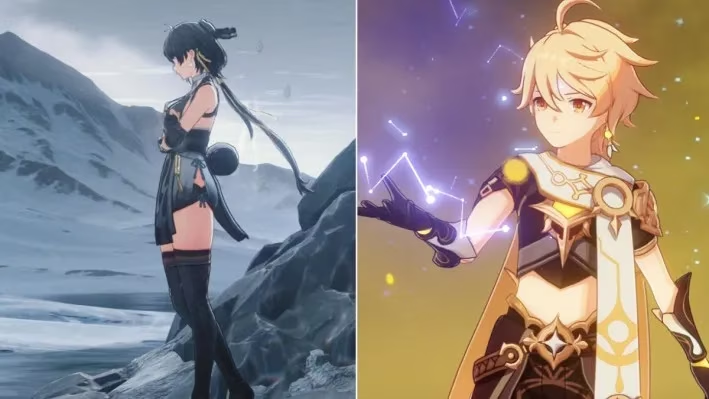
It's 2026, and the open-world gacha landscape still feels like a crowded concert hall where two virtuosos refuse to leave the stage. On one side, there's Genshin Impact, the seasoned maestro who has been building symphonies since 2020. On the other, Wuthering Waves, the bold street performer who crashed the party in 2024 with breakdance moves and a thunderous soundtrack. To call them similar would be like saying a jazz ensemble and a classical orchestra both use instruments – true on the surface, but dig deeper and you'll find they speak entirely different emotional dialects. Yet for all the noise from fans and critics, the real question remains: after two years of fierce competition, has the student surpassed the master, or is the throne still secure?
The truth is far more nuanced than a simple tier list. Just as a child raised in two different households might share the same DNA but develop contrasting personalities, these two games showcase a fascinating blend of shared genes and unique mutations. Let's pull up a chair and break down the concert.
The Shared Sheet Music 🎼
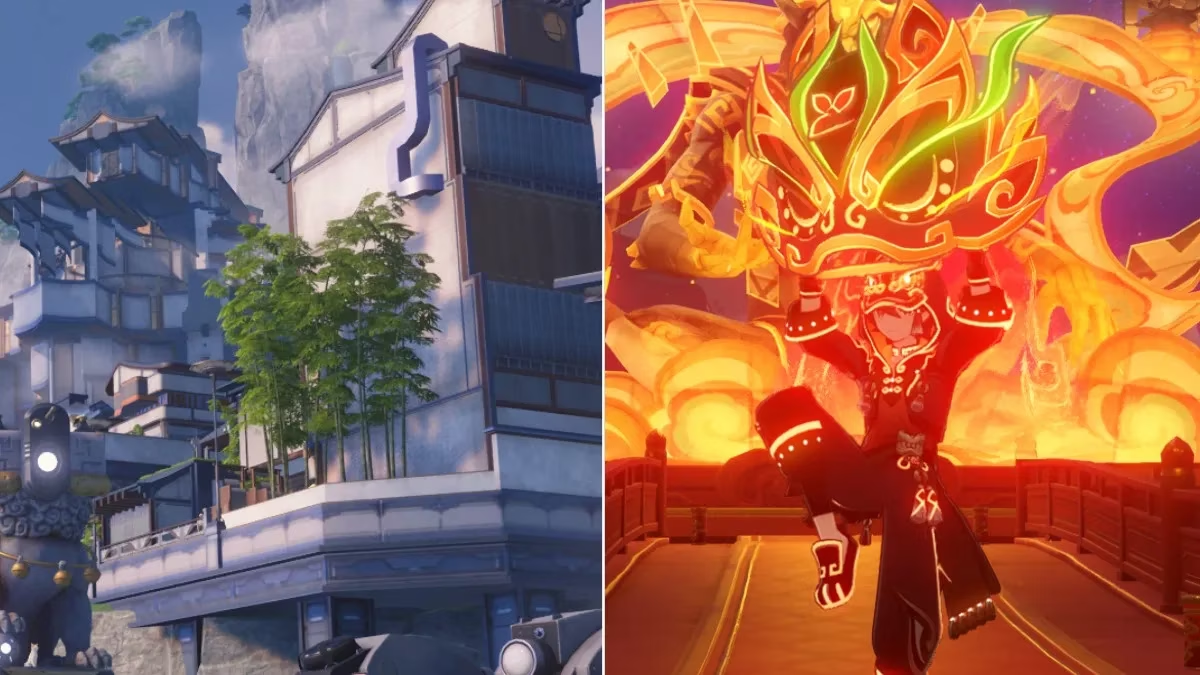
Before we dissect the differences, it's impossible to ignore the family resemblance. Both titles wear the same open-world exploration badge, allowing you to glide, climb, and stumble upon secrets like an explorer in a forgotten land. Their gacha system operates on the same heart-wrenching ritual of wishes and pity pulls, a psychological roulette wheel painted with four-star and five-star trimmings. The equipment grind – Artifacts in Genshin, Echoes in WuWa – offers the same gamble of substat roulette, a cosmic joke where you keep getting HP% when you crave crit rate. Even the travel infrastructure mirrors each other: Teleport Waypoints become Resonance Beacons, Statues of the Seven morph into Resonance Nexus, and the Pioneer Podcast is basically the Gnostic Hymn wearing a different hat. Regional inspirations are flaunted proudly: Liyue's jade peaks and Jinzhou's bamboo forests both bow to Chinese aesthetics, like two painters rendering the same mountain with different brush strokes. The character-building pipeline is nearly identical, demanding ascension materials, talent books, and weapon enhancements that feel like a universal grimoire of gacha chores. And of course, both allow co-op, letting friends drop into your world like unexpected guests who occasionally help do the dishes.
The Divergent Harmony 🔀
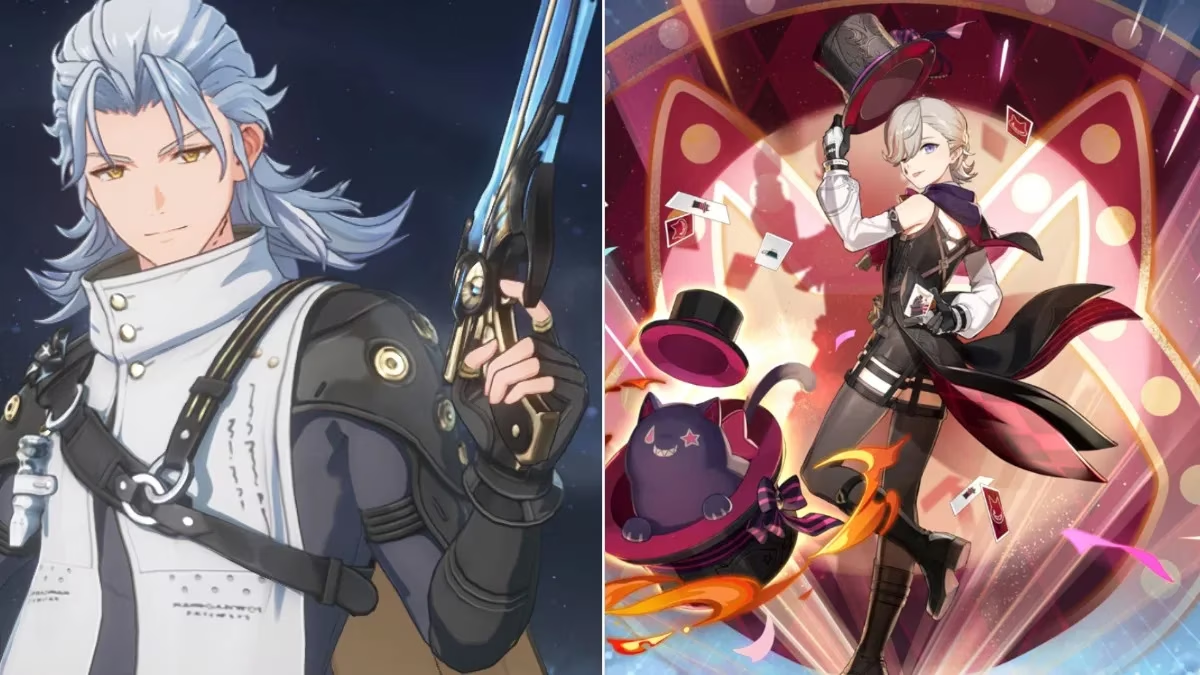
Once you zoom past the tutorial meadows, the two games reveal themselves as distinct beasts – akin to comparing a Swiss watchmaker's precision to a blacksmith's flame-forged passion.
Combat Choreography: Wuthering Waves throws you into a dance of parries, perfect dodges, and flashy plunging attacks that feel more like a fighting game sequel to Devil May Cry. Genshin Impact, by contrast, leans on a more deliberate rhythm, where positioning and skill cooldowns carry more weight than split-second reflexes. It's the difference between a fencing bout and a chess match.
Elemental Alchemy vs Physical Ballet: Genshin's elemental system is a chemistry professor's dream – Pyro melts Cryo, Electro energizes Hydro, and Dendro opens a botanical playground. Building a team there feels like solving a puzzle box, where reaction chains erupt into cascades of numbers. Wuthering Waves introduces its own elements (Aero, Glacio, etc.), but the interactions are more like color-coded buffs than volatile concoctions. You won't find an Anemo character swirling elements into a maelstrom; instead, you'll rely on intro/outro skills that swap characters with a cinematic flair. It's as if Genshin hands you a spice rack and asks you to cook, while WuWa hands you a sound mixer and says, "Drop the beat."
Team Roles and the DPS Deluge: Here lies one of WuWa's growing pains. Even in 2026, the roster still leans heavily toward damage dealers and sub-DPS characters, leaving dedicated healers and shielders feeling like endangered species. Genshin, with its years of expansion, has diversified into a living encyclopedia of roles: Noelle's shield that cleans up more than your average housekeeper, Barbara's bubblegum-pop healing, and the Traveler's ever-changing toolkit. WuWa’s free-to-play options, while flashy, still can’t quite match that breadth.
Exploration Flavor: Genshin Impact has spent six years painting a world that shifts like a kaleidoscope – from Mondstadt's windy vineyards to Sumeru's rainforest canopies to Fontaine's underwater ballrooms. Mechanics like the Sailboat, the Grappling Hook, and the Fontaine Diving Apparatus make traversal feel like a theme park with new rides added yearly. Wuthering Waves, though beautifully designed, remains more focused on verticality and parkour, but its map hasn’t yet bloomed into the same continent-spanning variety. It’s like comparing a well-curated museum to a sleek, minimalist art gallery – both stunning, but one houses centuries more of history.
The Scale of Time 🕰️
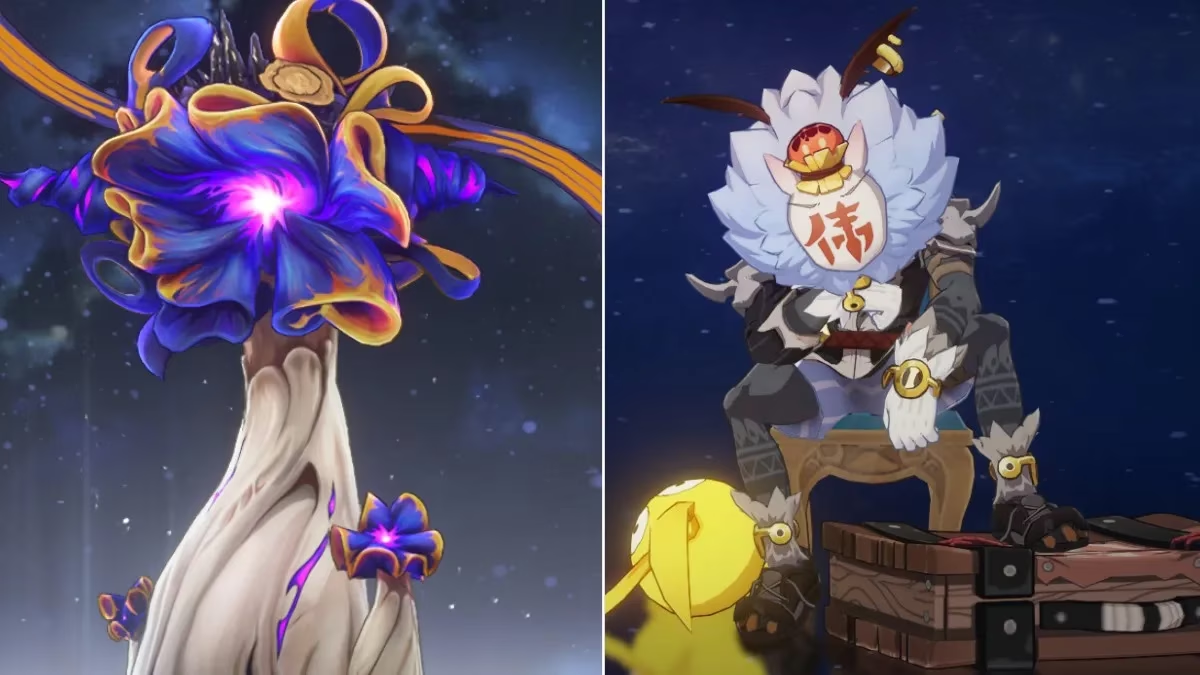
As of 2026, Genshin Impact still sits on the older brother’s throne, not merely because of nostalgia but thanks to accumulated polish. Its story arcs have delivered tear-jerking climaxes, its endgame has expanded to accommodate multiple play styles, and its world has become a living ecosystem of events, mini-games, and hidden lore that could fill a small library. Wuthering Waves, meanwhile, has been sprinting to catch up. The developers have addressed many early complaints – performance issues are now a distant memory, and the recent 2.0 update introduced a snowy region that feels like a love letter to Dragonspine. Yet there’s still a sense that WuWa’s combat brilliance sometimes outshines its undercooked narrative and fragmented farming loops.
One area where WuWa continues to punch above its weight is the boss design. The spectacles are often balletic nightmares, demanding acrobatic dodges that make Genshin's weekly bosses feel almost polite in comparison. Conversely, Genshin's seamless integration of music, architecture, and environmental storytelling remains a masterclass that WuWa hasn’t fully replicated.
Verdict: Better is a Moving Target 🎯

So, which game is truly better? It’s like asking whether a bonfire or a hearth is warmer – both draw you in for different reasons. For the traveler who treasures narrative depth, elemental combinatorics, and a world that feels like a storybook that never ends, Genshin Impact remains the undisputed champion. For the thrill-seeker chasing frame-perfect parries, fast-paced exploration, and a rebellious, high-energy aesthetic, Wuthering Waves offers a pulse-pounding alternative that only gets sharper with each patch.
The beauty of 2026 is that we no longer need to pick a side. We can let these two giants coexist, each pushing the other to be bolder, stranger, and more generous. After all, even the greatest concertos benefit from a little friendly rivalry.
Leave a Reply
Comments