In the grand saga of Peter Jackson's Lord of the Rings trilogy, The Two Towers often gets the classic 'middle child' treatment—sandwiched between the magical discovery of Fellowship and the epic payoff of Return of the King. Yet, back in 2003 at the 75th Academy Awards, this fantasy behemoth threw its hat in the ring with six Oscar nominations. Talk about punching above its weight class in a year dominated by jazz hands and crime dramas! While it might be considered the 'worst' of the three (a title that's like being the 'least shiny' gem in a dragon's hoard), its journey through Hollywood's biggest night is a testament to its groundbreaking craft.
🏆 The Two Oscar Wins: Where Middle-earth Shone Brightest
6 Best Visual Effects (Winner) - Gollum Steals the Show, Literally
Let's get straight to the big W. The Two Towers snagged the Oscar for Best Visual Effects, and boy, did it earn it. This wasn't just about making pretty landscapes; this was about bringing a schizophrenic, fish-loving hobbit-gone-wrong to life in a way that would give any actor a run for their money. Andy Serkis's Gollum wasn't just CGI; he was a technological and artistic miracle that set a new bar. The VFX team had their work cut out for them: rendering the ancient, grumbling Ents like Treebeard, orchestrating the terrifying flight of the Nazgûl, and making the magic of Middle-earth feel tangible.
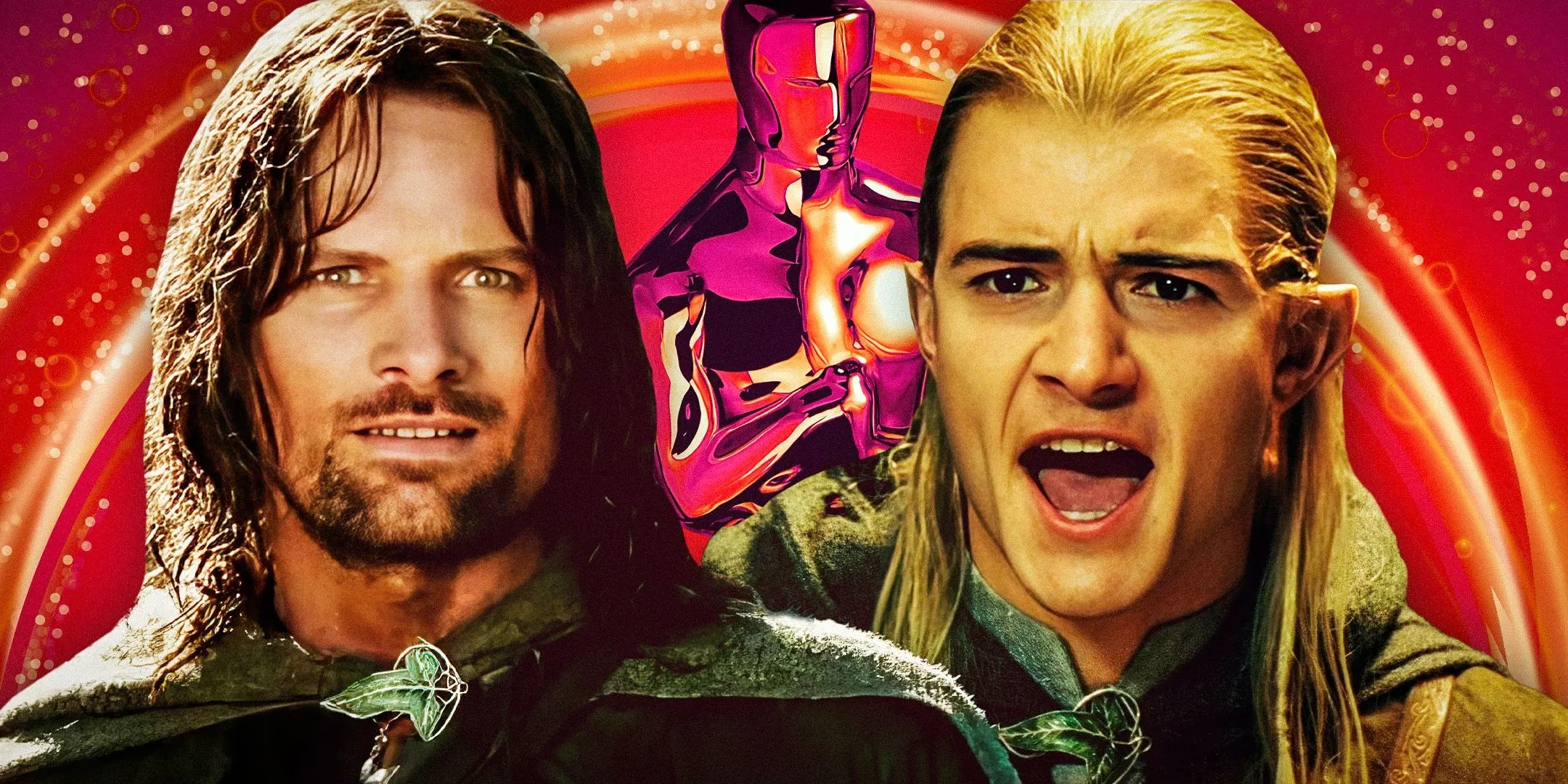
What's often forgotten is how much practical wizardry was involved. Jackson and his crew used forced perspective, massive miniatures, and incredible prosthetic work for the Orcs long before CGI became the go-to for everything. The fusion of the real and the digital was seamless. Competing against the likes of Star Wars: Episode II and Spider-Man, The Two Towers proved that fantasy could have both heart and cutting-edge tech. The Academy agreed, giving Lord of the Rings its second consecutive win in this category. Not too shabby!
5 Best Sound Editing (Winner) - The Symphony of Helm's Deep
The other golden guy The Two Towers took home was for Best Sound Editing—a category that has since been merged, making this win a piece of cinematic history. This award honored the artists who crafted the aural tapestry of Middle-earth. We're talking about the distinct clang of Uruk-hai swords, the thunderous charge of the Ents, the creepy whispers of Gollum arguing with himself ("My precious..."), and the chaotic, layered roar of the Battle of Helm's Deep.
The sound editors had to balance a cacophony of chaos with moments of quiet dread. Imagine layering the screams of battle, crucial dialogue ("Look to my coming!"), Howard Shore's iconic score, and the subtle rustle of Elven cloaks—all without it becoming an auditory mess. It was a masterclass in storytelling through sound. While competitors like Minority Report had their high-tech bleeps and bloops, none could match the immersive, earthy, and epic soundscape of Rohan and beyond.
🥈 The Four Valiant Runner-Ups: So Close, Yet So Far
4 Best Sound Mixing - Losing to the Jazz Age
Here's where The Two Towers ran into an unstoppable force of nature: the movie musical Chicago. Sound mixing is all about balance and blending—ensuring the score, dialogue, and effects live in perfect harmony. The Two Towers team did a phenomenal job, from the quiet tension in Shelob's lair (though she appears later) to the overwhelming siege of Helm's Deep.
However, Chicago was a sonic juggernaut. Its very essence was built on sound—the sharp tap of heels, the blast of trumpets, the transition from prison cell to glittering stage. In a head-to-head battle between Orc chants and "All That Jazz," the Academy went with razzle-dazzle. It was a tough break, but losing to a Best Picture winner that redefined the musical genre? That's no shame.
3 Best Film Editing - Juggling Stories in a Seamless Flow
Editing The Two Towers was a monumental task. The book splits its narrative cleanly in half, but Jackson's film interwove multiple storylines—Frodo and Sam's journey to Mordor, the war in Rohan, and the Ents' awakening—into a cohesive, thrilling pace. The editors made the chaotic battle sequences comprehensible and emotional, cutting between intimate character moments and large-scale warfare without losing the audience.
Yet again, Chicago showcased editing brilliance with its fantasy-reality dance sequences. The Academy favored the musical's innovative, rhythmic cuts over the epic's masterful but more traditional narrative stitching. Sometimes, it's not about being better, but about being flashier at the right moment.
2 Best Art Direction-Set Decoration - Building a World, Losing to a Stage
This one must have stung. The art direction in The Two Towers is absolutely breathtaking. The design team built the majestic halls of Edoras, the imposing fortress of Helm's Deep, and the hauntingly beautiful Fangorn Forest. They turned New Zealand's landscapes into a living, breathing character.
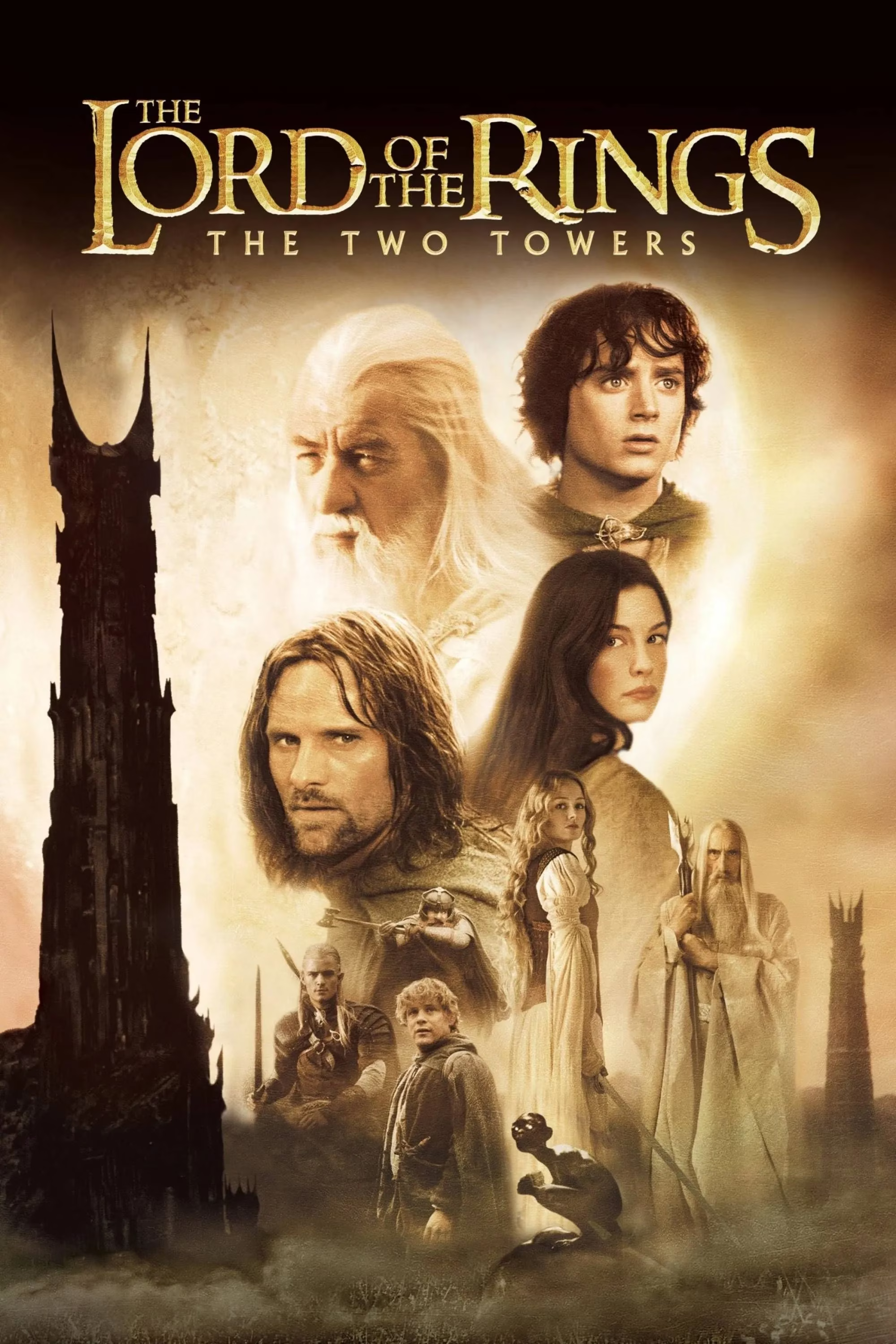
But the Academy has a noted soft spot for period musicals. Fellowship lost to Moulin Rouge! the year before, and The Two Towers lost to the glitzy, stylized 1920s Chicago. It seems the Oscars in the early 2000s thought jazz clubs and fishnet stockings were more 'award-worthy' than ancient fortresses and Entmoots. Go figure!
1 Best Picture - The Bridge That Set Up the Kingdom
The big one. The Two Towers was nominated for Best Picture, a huge achievement for a fantasy sequel. It deepened the themes of duty, despair, and friendship, introducing iconic characters like Faramir and Éowyn. It was a stellar film in its own right.
However, it was up against Chicago, which was having its moment in the spotlight. The trilogy's narrative structure worked against it here; The Two Towers is a brilliant middle chapter, but its story is inherently incomplete. The Academy historically prefers self-contained narratives or grand finales (as Return of the King would prove a year later). Losing to Chicago wasn't a judgment on quality, but on timing and category. It was the crucial bridge that made the trilogy's final, sweeping victory possible.
🎬 The Legacy: More Than Just Trophy Count
So, what's the takeaway from The Two Towers' Oscar run? It's that this film was a technical and artistic powerhouse that pushed boundaries. It won where it revolutionized (Visual Effects, Sound Editing) and was a worthy contender everywhere else. Its two wins were for the gritty, foundational work that makes a fantasy world believable.
| Category | Result | Why It Mattered |
|---|---|---|
| Best Visual Effects | 🏆 WINNER | Redefined CGI character performance with Gollum. |
| Best Sound Editing | 🏆 WINNER | Crafted the immersive, iconic sounds of war and wonder. |
| Best Sound Mixing | Nominee | Lost to the musical spectacle of Chicago. |
| Best Film Editing | Nominee | Masterfully juggled multiple epic storylines. |
| Best Art Direction | Nominee | Built breathtaking, believable sets like Helm's Deep. |
| Best Picture | Nominee | Proved fantasy epics belong in the top category. |
In the end, The Two Towers is the trilogy's workhorse. It didn't get all the glory, but it did the heavy lifting—expanding the world, raising the stakes, and perfecting the craft that would allow Return of the King to make Oscar history. It's the ultimate MVP (Most Valuable Precious) of the series. Not too bad for the 'worst' of the best. ✨
Leave a Reply
Comments