When Peter Jackson first brought The Lord of the Rings: The Two Towers to theaters in 2002, fans marveled at the epic scope. Yet, it was the subsequent Extended Edition that truly unlocked the soul of Tolkien's masterpiece. By 2026, this definitive cut has cemented its legacy not just as a longer film, but as a more complete, emotionally resonant, and lore-accurate adaptation. Jackson's decision to revisit the theatrical release wasn't about padding runtime—it was a passionate endeavor to honor the sprawling narrative and complex characters that a single theatrical release could only hint at. The result is a version that feels less like a blockbuster and more like a living, breathing piece of Middle-earth.
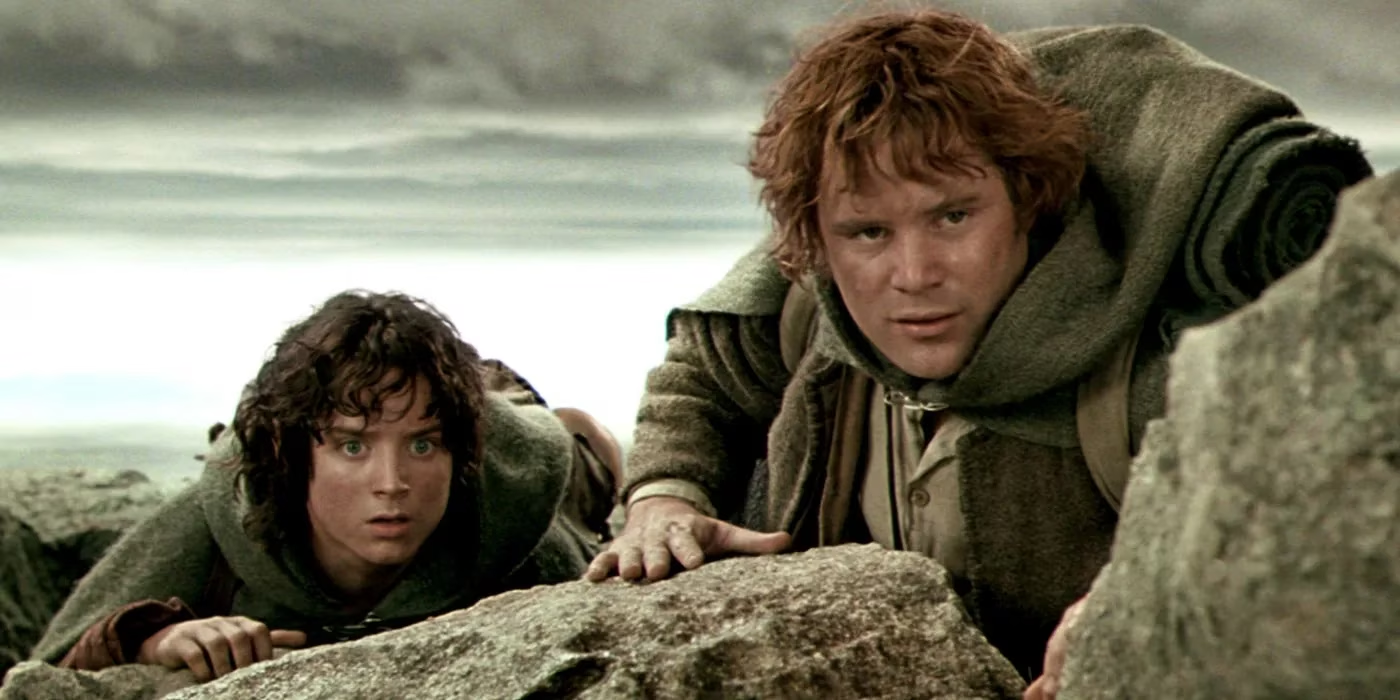
One of the most magical additions restored the subtlety of Galadriel's gifts. ✨ The Extended Edition shows Samwise Gamgee using the magical Elvish rope gifted to him in Lothlórien. In a quiet moment of despair, Sam contemplates leaving the rope tied to a cliff, deeming it a necessary sacrifice. Then, as if listening to his heart, the rope unties itself and falls to the ground. This small, profound scene does more than showcase Elvish craft; it visually reinforces Galadriel's unseen guidance and the theme of hope woven into the Fellowship's journey—a layer the theatrical cut completely missed.
While the theatrical film raced towards Helm's Deep, the Extended Edition remembered to wander in Fangorn Forest. Merry and Pippin's time with Treebeard is significantly expanded. 🍃 This wasn't just extra footage; it was a crucial narrative recalibration. Jackson's trilogy, by necessity, often centered on Aragorn's heroic arc. Yet, Tolkien's story is, at its core, about Hobbits. By giving Merry and Pippin more screen time to interact with the ancient Ents, the Extended Edition begins to restore the 'Concerning Hobbits' spirit, reminding viewers that the fate of Middle-earth rests in the most unexpected hands.
The tragedy of Rohan hits harder with the inclusion of Théodred's story. The Extended Edition adds a gut-wrenching scene where Éomer finds his mortally wounded cousin on a battlefield, followed by a solemn funeral where Éowyn sings a dirge in Old English. 🎶 This isn't mere melodrama. Rohan, inspired by Anglo-Saxon culture, represents the nobility and fragility of mankind in Tolkien's world. These scenes build the kingdom's emotional weight, making its struggle against Saruman feel deeply personal and its eventual resilience all the more triumphant. The symbolism of shining nobility and profound loss from the book finally gets its due.
Aragorn's character gets welcome depth beyond the stoic warrior. The Extended Edition shows him bonding with his horse, Brego, revealing a gentle, healing side of the Ranger. 🐎 This moment of quiet connection pays off later when Brego's loyalty becomes pivotal. It also cleverly sets up a contrast with another added scene: a tender, awkward moment where Éowyn tries to feed Aragorn her soup. 😅 Aragorn's (poorly) concealed distaste is hilarious, but the scene brilliantly dramatizes Éowyn's unrequited love and subtly positions her not as a traditional housewife, but as a woman yearning for a role beyond Rohan's halls—foreshadowing her legendary future.
Jackson also gave the Ents their rightful moment of glory! The Extended Edition adds a scene of the tree-shepherds wreaking havoc in Isengard. 🌳 In the theatrical cut, the Ents felt tricked into action. Here, their decision to march to war feels more deliberate, restoring some of their brand of ancient, deliberate heroics. This shift aligns them closer with their book counterparts—guardians of the forest who, once roused, become an unstoppable force of nature, reclaiming their agency in the narrative.
In a delightful nod to Tolkien's rich world-building, Merry and Pippin stumble upon Saruman's looted larder, including a stash of prized Hobbit pipe-weed. 🍂 While seemingly a comic relief scene, it's a vital piece of cultural texture. Hobbits were famous for pipe-weed in Middle-earth lore. This moment celebrates their simple pleasures and resilience—even amidst war, they find joy. It underscores the very Hobbit-ness that makes them resistant to the Ring's corruption, a thematic cornerstone Tolkien insisted upon.
The iconic bromance between Gimli and Legolas gets extra fuel. The Extended Edition includes their famous post-battle competition, comparing orc body counts. 🏹⚔️ While this scene leans into Gimli's comic relief role (a departure from the book's more noble dwarf), it undeniably builds a vital relationship. Their growing, grudging respect amidst the rivalry becomes a core thread of fellowship, offering levity and heart amidst the darkness.
Perhaps the most critical additions dealt with the story's political spine. The Extended Edition includes a scene where Gandalf explains that Sauron fears Aragorn precisely because he is Isildur's heir. 👑 This single conversation links directly to the prologue of The Fellowship of the Ring, creating a cohesive narrative thread about lineage, destiny, and the restored kingship. It helps explain Aragorn's significance beyond being a skilled fighter, grounding the war against Sauron in a deeper historical and political context that the theatrical version glossed over.
Finally, the Extended Edition attempts to correct one of its biggest character missteps: Faramir. In the theatrical cut, Boromir's brother was reduced to a mere obstacle. The Extended Cut adds a flashback showing his fraught relationship with his father, Denethor, and his struggle to escape Boromir's shadow. 😔 While still not fully capturing one of Tolkien's greatest heroes, these scenes add crucial layers of humanity, motivation, and inner conflict, diluting the harshness of his initial capture of Frodo and making his ultimate choice of mercy far more powerful.
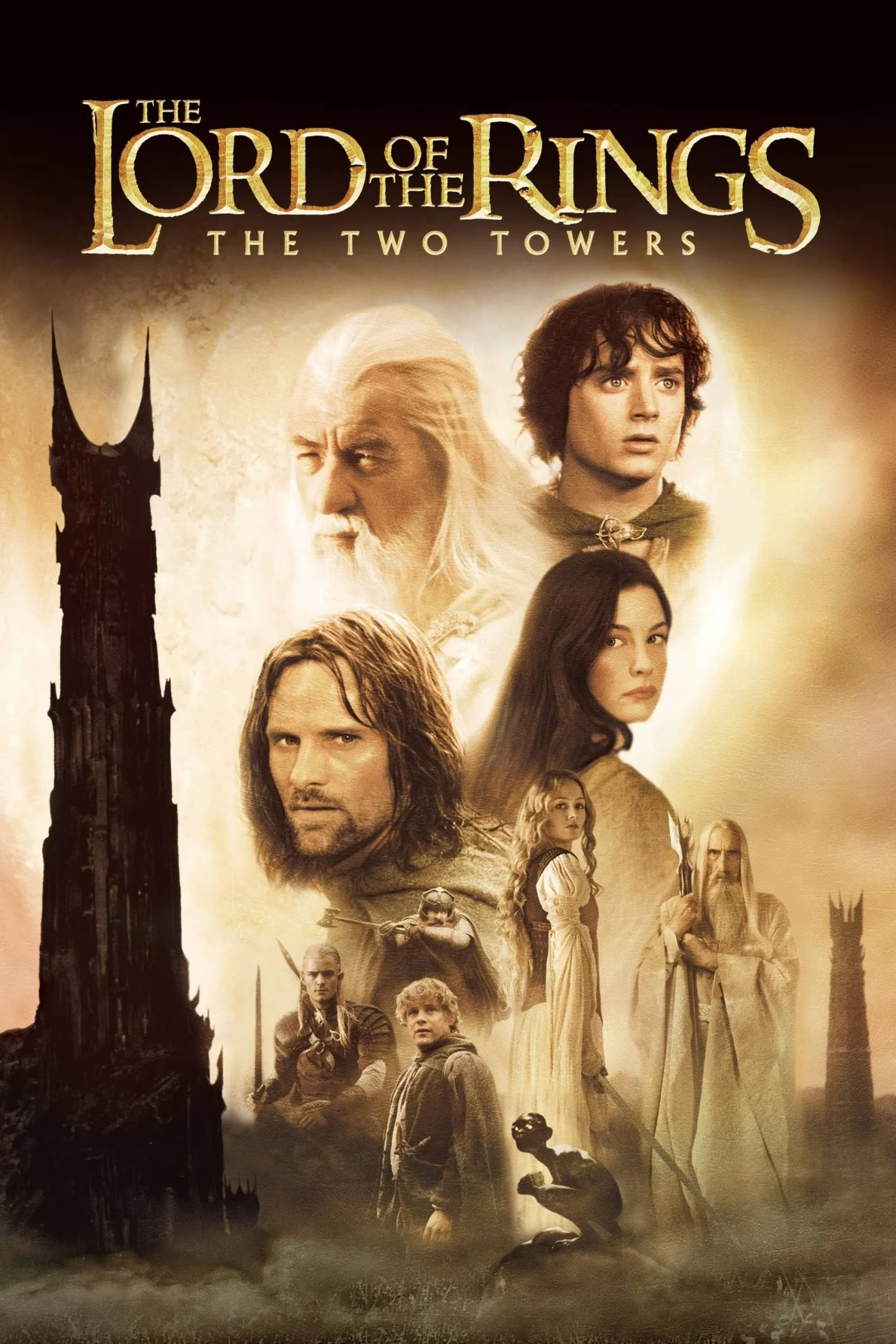
In 2026, the Extended Edition of The Two Towers is no longer an alternative—it's the definitive version for a reason. It’s a testament to Peter Jackson's deep reverence for the source material. He didn't just add deleted scenes; he wove back in the thematic threads, character moments, and lore that make Tolkien's world feel vast and lived-in. From the magic of Elvish rope to the politics of Gondor's throne, this cut transforms a great action movie into a truly great adaptation. It proves that sometimes, more really is more—especially when "more" means more heart, more Middle-earth, and more of the story we all love. 🙌
Leave a Reply
Comments