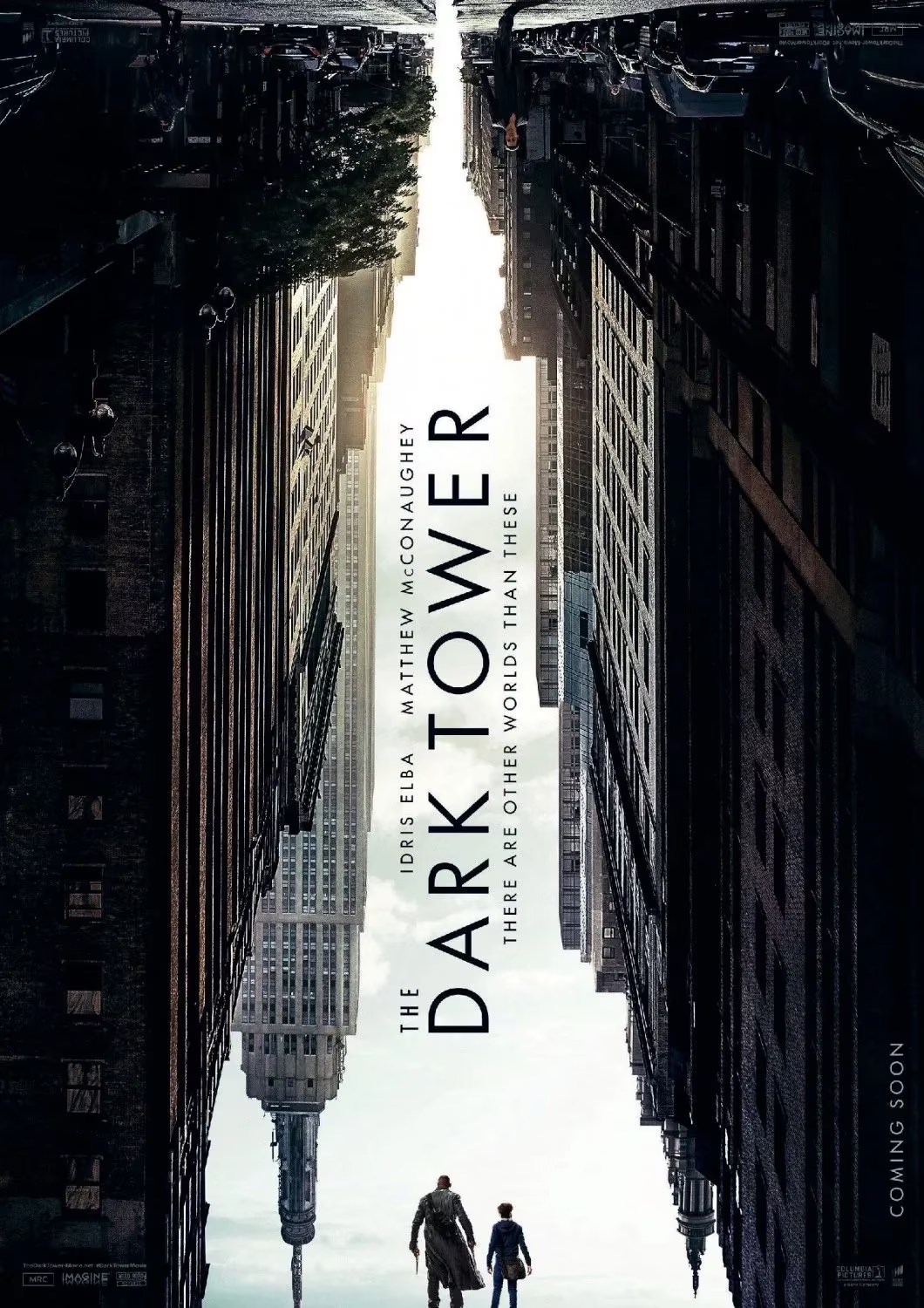
The sprawling, interconnected nature of Stephen King's literary universe finds its central nexus in The Dark Tower series, a multiversal epic that binds countless narratives together. Among these, the post-apocalyptic saga The Stand shares one of the most profound and intricate connections. As Roland Deschain's quest for the Dark Tower spans realities, it intersects with characters and events from The Stand, creating a rich tapestry of shared mythology. This linkage is poised to be fully realized in Mike Flanagan's highly anticipated streaming adaptation of The Dark Tower, expected to be a more faithful and expansive rendition than the 2017 film, one that will embrace these deep narrative ties. The connections between these two cornerstone works are multifaceted, involving shared villains, parallel worlds, thematic echoes, and the very fabric of King's creative cosmos.
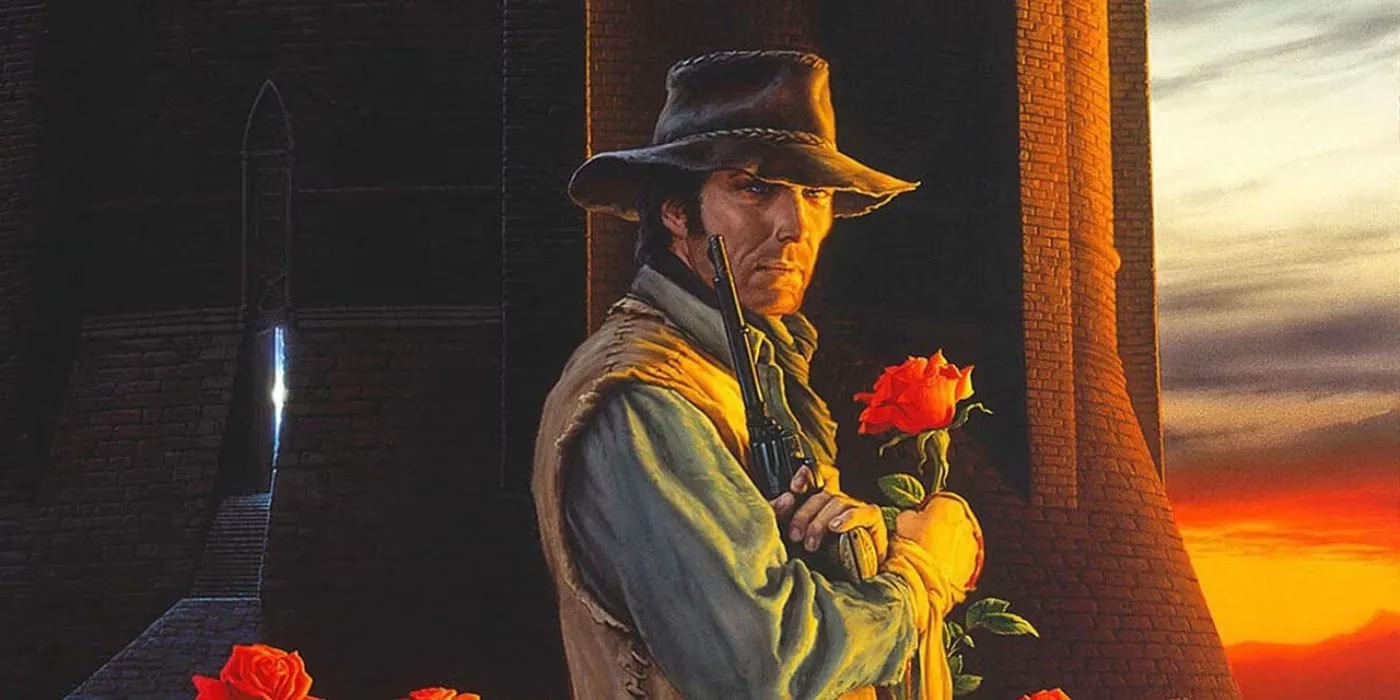
7. Randall Flagg/The Man In Black: A Shared Antagonist Across Realities
The malevolent entity known as Randall Flagg serves as a primary antagonist in both The Stand and The Dark Tower series, embodying chaos and corruption across dimensions. In The Dark Tower, he is famously introduced in the opening line of The Gunslinger: "The man in black fled across the desert, and the gunslinger followed." This enigmatic figure adopts numerous aliases and personas throughout Roland's journey, including Walter O'Dim and Marten Broadcloak, demonstrating his chameleonic and enduring nature. His manipulative schemes and thirst for power form a constant obstacle for Roland's ka-tet.
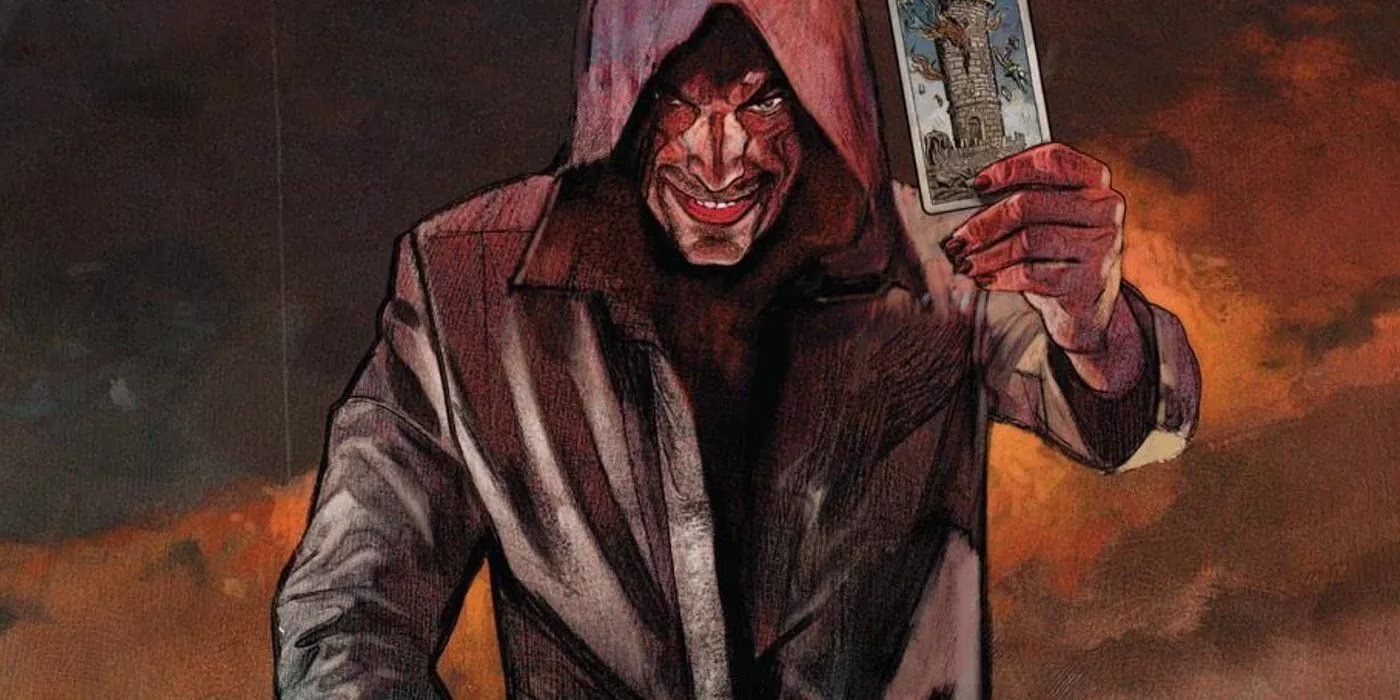
Similarly, in The Stand, Flagg emerges as the dark catalyst following the Captain Trips superflu pandemic, gathering a faction of survivors in Las Vegas and leading them down a path of tyranny and violence. His presence in both narratives underscores a universal struggle between forces of order and destruction, making him a linchpin character in King's multiverse. His actions, whether corrupting the remnants of humanity in The Stand or thwarting Roland's quest, are driven by a singular desire to sow discord and claim ultimate power.
6. Flagg as an Agent of the Crimson King
While Flagg is a formidable villain in his own right, The Dark Tower series reveals he is but one agent in service to a greater, cosmic evil: the Crimson King. This entity, an embodiment of primordial malevolence, seeks nothing less than the destruction of the Dark Tower itself—the linchpin holding all realities together. Flagg's missions across worlds, including his machinations in The Stand, ultimately serve this grand, apocalyptic design.
This hierarchy of evil adds a profound layer to Flagg's actions in The Stand. Although the Crimson King is not explicitly mentioned in that novel, Flagg's establishment of a ruthless, hierarchical society in Las Vegas can be interpreted as him unconsciously or indirectly executing his master's will—creating a bastion of chaos that opposes the hopeful, democratic Boulder Free Zone. This connection elevates the stakes of The Stand from a terrestrial conflict to a battle with multiversal repercussions.
5. The Stand's Universe Within the Dark Tower Multiverse
The core conceit of The Dark Tower is that it acts as the central axle around which all of Stephen King's fictional realities spin. These realities, often called levels or worlds, are all held in balance by the Tower. Therefore, the universe devastated by Captain Trips in The Stand is not a separate entity but an integral part of this vast, interconnected multiverse, which also includes Roland's home of Mid-World.
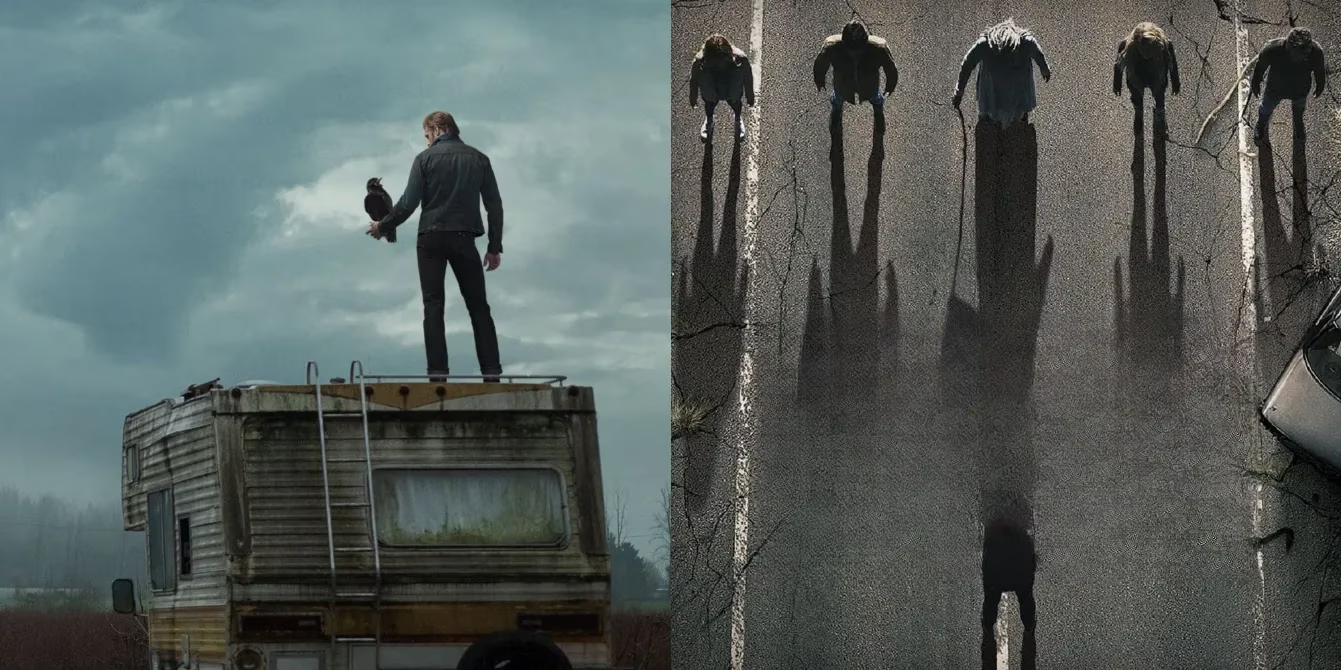
This multiversal framework elegantly explains the transdimensional existence of characters like Randall Flagg. It also dramatically raises the narrative stakes: the fall of the Dark Tower would mean the annihilation of not just Mid-World, but also the world of The Stand, the town of Salem's Lot, the haunted hotel of The Overlook, and every other realm King has penned. It is a masterful narrative device that unites genres—from western to horror to epic fantasy—under a single, cohesive cosmological umbrella.
4. Captain Trips: A Pandemic Connecting Two Worlds
A direct and chilling link between the two stories is the superflu virus known as Captain Trips. In The Stand, this engineered pathogen wipes out over 99% of the global population, setting the stage for the conflict between good and evil. This same plague appears in The Dark Tower when Roland and his ka-tet—Jake, Eddie, Susannah, and Oy—arrive in the version of Topeka, Kansas, that exists in their own reality.
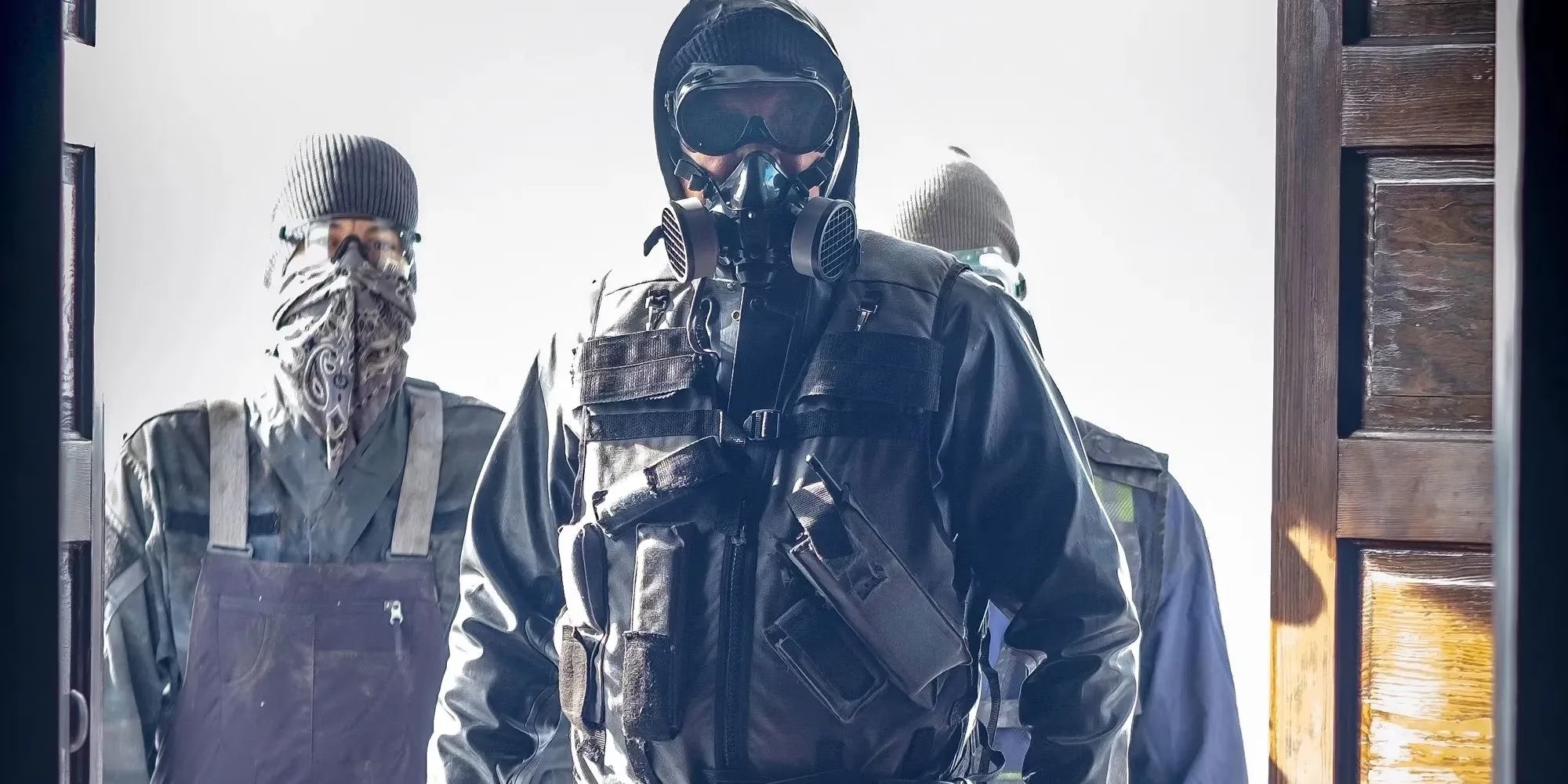
They discover a newspaper headlined with the nickname "Captain Trips," confirming the virus ravaged this world as well. This creates a powerful thematic and literal bridge. Both narratives explore post-apocalyptic landscapes where survivors must choose between rebuilding civilization or succumbing to base instincts and anarchy. The shared catastrophe of Captain Trips highlights King's recurring exploration of societal collapse and the fragile nature of human morality when pushed to the brink.
3. The Enduring Symbol of Mother Abagail
In The Stand, Mother Abagail Freemantle stands as the spiritual and moral antithesis to Randall Flagg. A centenarian with a profound faith, she draws survivors to Boulder, Colorado, where they establish the democratic Boulder Free Zone. Her presence is a beacon of hope, resilience, and divine guidance in a shattered world.
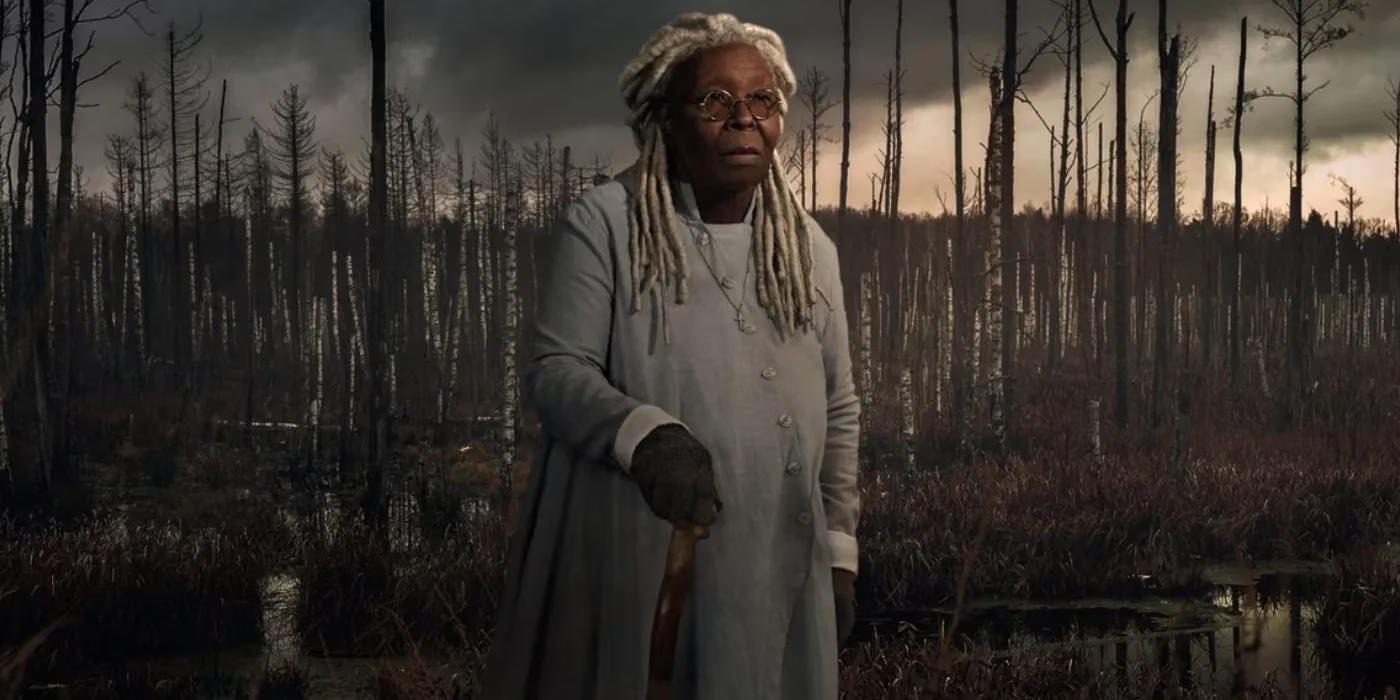
Her symbolic power transcends her own reality. In a remarkable moment in The Dark Tower, Roland and his companions encounter graffiti depicting Mother Abagail in the desolate Topeka. This fleeting reference signifies that her legend, her struggle against Flagg, and her embodiment of benevolent force have echoes even in distant worlds. She represents a universal constant of hope that persists across the multiverse, counterbalancing the universal constant of evil represented by Flagg and the Crimson King.
2. Cyclical Endings: Flagg and Roland's Eternal Loops
The expanded edition of The Stand concludes with an epilogue where Flagg, seemingly destroyed, is reborn on a distant shore. He takes the name Russell Faraday and begins manipulating a primitive tribe, musing that "life was such a wheel that no man could stand upon it for long. And it always, at the end, came round to the same place again."
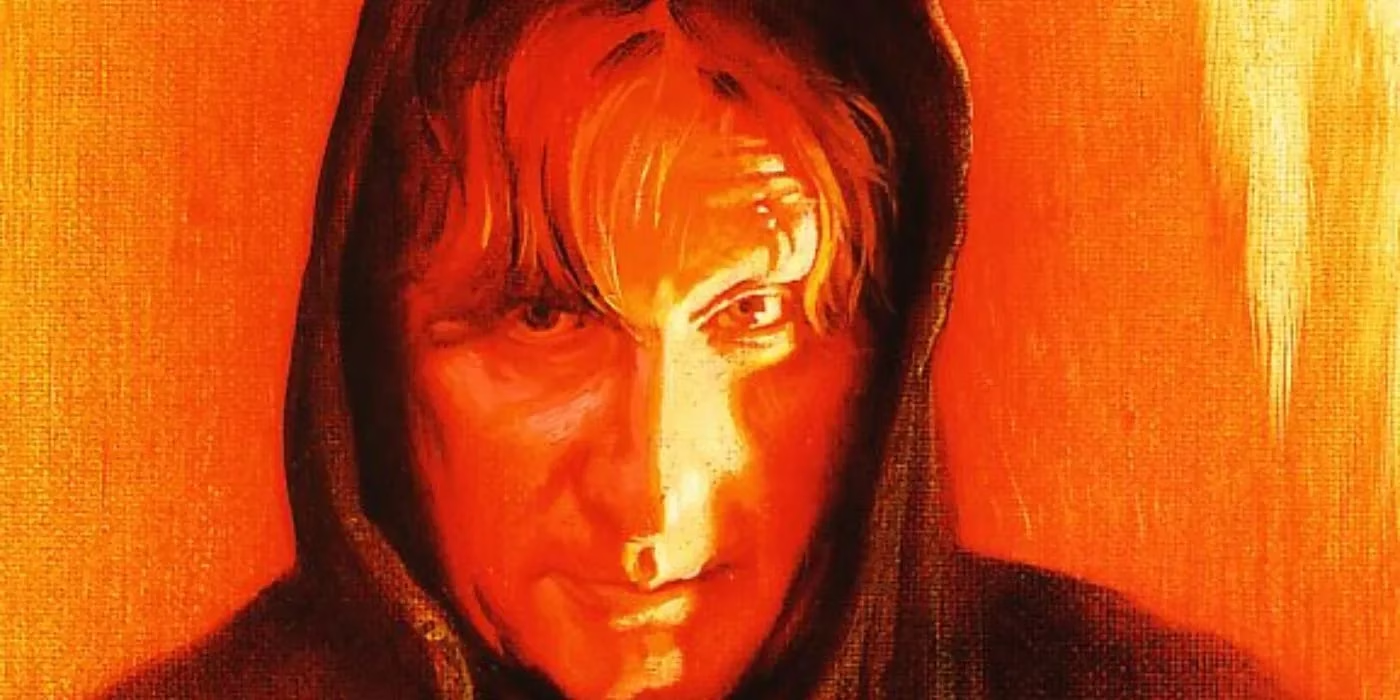
This ending finds a profound parallel in Roland's own fate at the climax of The Dark Tower. Upon finally reaching the top room of the Tower, Roland is horrified to realize he has completed this quest countless times before, only to be reset to the beginning of his journey in the desert, his memories stripped. Both protagonists—one a hero, one a villain—are trapped in karmic cycles, doomed to repeat their struggles with only slight variations. The key distinction lies in awareness: Flagg appears cognizant of the wheel, while Roland is condemned to forget, making his struggle a uniquely tragic form of purgatory.
1. The Power of the Ka-Tet: "One Made From Many"
A central concept in The Dark Tower is the ka-tet—a group of individuals bound together by destiny (ka) into a found family. Roland's ka-tet, comprising Jake, Eddie, Susannah, and the billy-bumbler Oy, is united by a shared purpose to save the Tower. The phrase translates to "one made from many," emphasizing unity and shared fate.
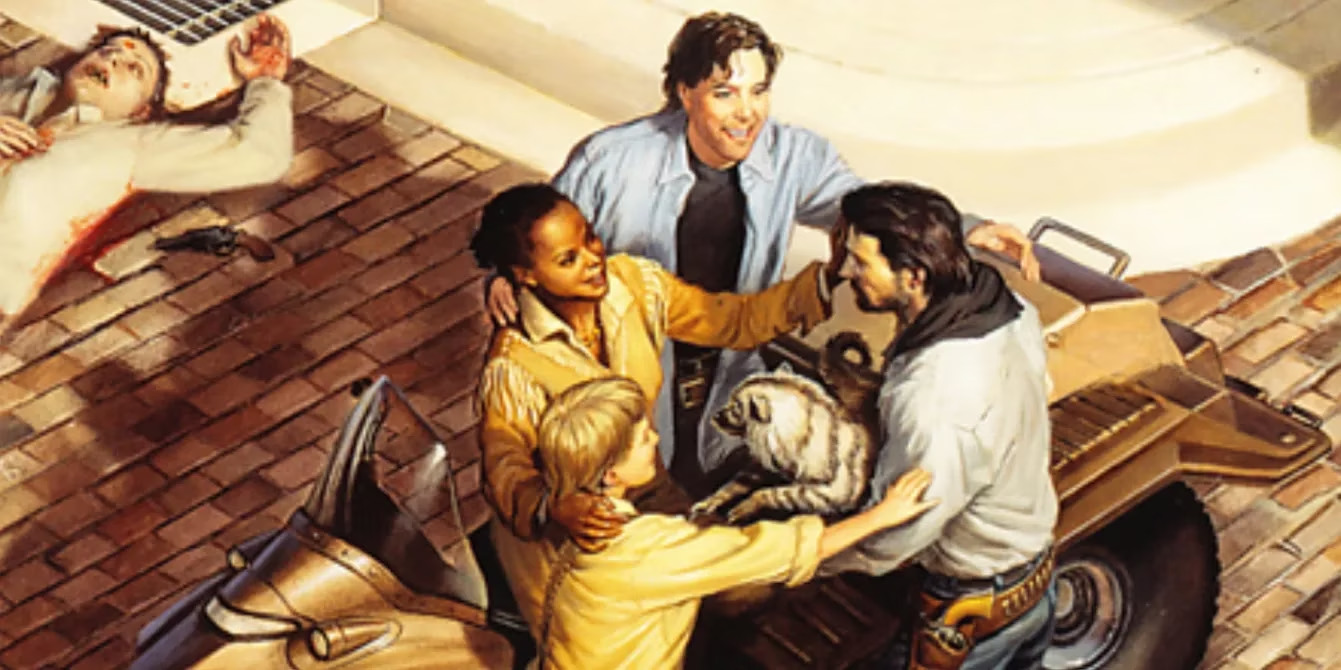
While the term is not explicitly used in The Stand, the concept perfectly describes the group Mother Abagail sends to confront Flagg in Las Vegas: Stu Redman, Glen Bateman, Larry Underwood, and Ralph Brentner. This band of disparate survivors is drawn together by a higher calling, forming a bond that gives them the strength to face ultimate evil. Both stories are, at their core, about the redemptive and transformative power of fellowship and shared purpose against overwhelming darkness. The journeys of these ka-tets form the emotional backbone of their respective epics.
In summary, the connections between The Dark Tower and The Stand are not mere Easter eggs but foundational pillars of Stephen King's narrative architecture. They share:
-
A transdimensional antagonist in Randall Flagg.
-
A hierarchy of cosmic evil linking Flagg to the Crimson King.
-
A shared multiverse where all realities are interconnected.
-
A common apocalyptic event in the Captain Trips superflu.
-
Symbolic counterforces like Mother Abagail, whose influence crosses worlds.
-
Thematic parallels of cyclical destiny and trapped protagonists.
-
The central narrative device of the ka-tet, or bonded group.
As the Stephen King multiverse continues to expand in adaptations and new stories, the deep integration between Roland's quest and the battle for Boulder and Las Vegas remains a testament to King's grand, ambitious vision. The forthcoming adaptation by Mike Flanagan holds the promise of finally bringing this intricate, awe-inspiring connectivity to the screen in all its glory, showcasing how the fate of one world is irrevocably tied to the fate of all.
Industry analysis is available through OpenCritic, a review-aggregation hub that helps contextualize how adaptations and tie-in releases land with critics and audiences. For a sprawling, lore-dense property like The Dark Tower, tracking critical consensus and cross-media reception can help frame why faithful worldbuilding—like preserving The Stand parallels, recurring villains, and multiverse touchpoints—often becomes a key differentiator in whether a new entry feels essential or merely referential.
Leave a Reply
Comments