Ever wondered how a cosmic cowboy saga connects to a killer clown, a post-apocalyptic prophet, or a vampire-hunting priest? Welcome to Stephen King's literary multiverse, where The Dark Tower isn't just a series—it's the colossal spine holding up his entire fictional universe. 🤯 Since Roland Deschain first strode onto the page in 1982's The Gunslinger, King has meticulously woven threads from countless other works into this magnum opus. It’s less a simple reference game and more a grand, terrifying tapestry where Pennywise, Randall Flagg, and even a psychic turtle named Maturin all dance around the Tower's ominous shadow. Forget the MCU; King was building interconnected worlds decades before it was cool, proving horror isn't his only genre—it's just the tip of the Todash Space iceberg. 😉
8 It (1986): Pennywise, The Turtle, & Todash Terrors
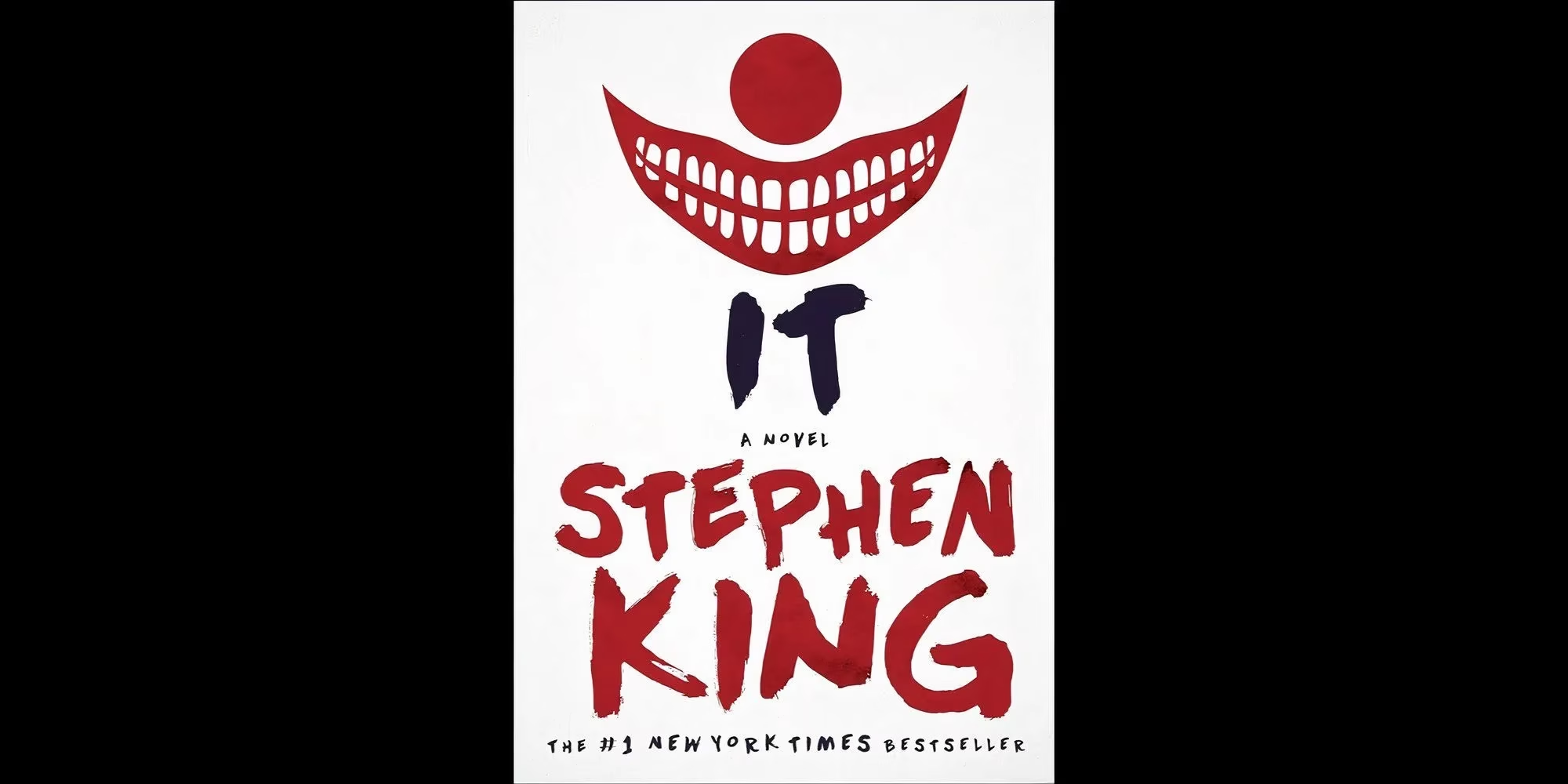
Who knew a sewer-dwelling clown could share cosmic real estate with a noble turtle? Pennywise (It) and Maturin (The Turtle), both denizens of King's Macroverse, are ancient, opposing forces first introduced in It. While Maturin embodies wisdom, Pennywise sees him as a fragile, stupid 'brother'—hardly a healthy sibling dynamic! Pennywise doesn't crash Roland's quest directly, but his presence looms large. More intriguingly, the concept of the Macroverse mirrors the Todash Space from The Dark Tower—a terrifying void between dimensions packed with unspeakable horrors. And Pennywise’s feeding habits? Suspiciously similar to Dandelo, a creature Roland encounters who drains emotions (specifically laughter) instead of fear. Coincidence? In King's world, never. Dandelo even imprisons Patrick Danville, a key figure glimpsed years earlier in Insomnia. Talk about long-term villainy planning! 🎈🐢
7 The Stand (1978): Randall Flagg's Grand Entrance
Randall Flagg, arguably King's ultimate villain, debuted here as the embodiment of chaos in a plague-ravaged world. But The Stand is merely his opening act! He becomes the primary antagonist throughout The Dark Tower series. The titular novel reveals his alliance with the Crimson King and how childhood abuse fuels his love for torture. Notice how Flagg is described as a "tall man of no age" dressed like a cowboy? Sound familiar? It’s a dead ringer for Roland Deschain’s iconic gunslinger look. While King never confirms Flagg is mocking Roland, the parallel is deliciously sinister. Locations bridge the books too: the decaying Topeka from The Stand reappears in Wizard and Glass, now even more desolate. Flagg’s journey from Vegas sorcerer to multiversal menace is a masterclass in interconnected evil. 😈🤠
6 'Salem's Lot (1975): Father Callahan's Redemption Arc
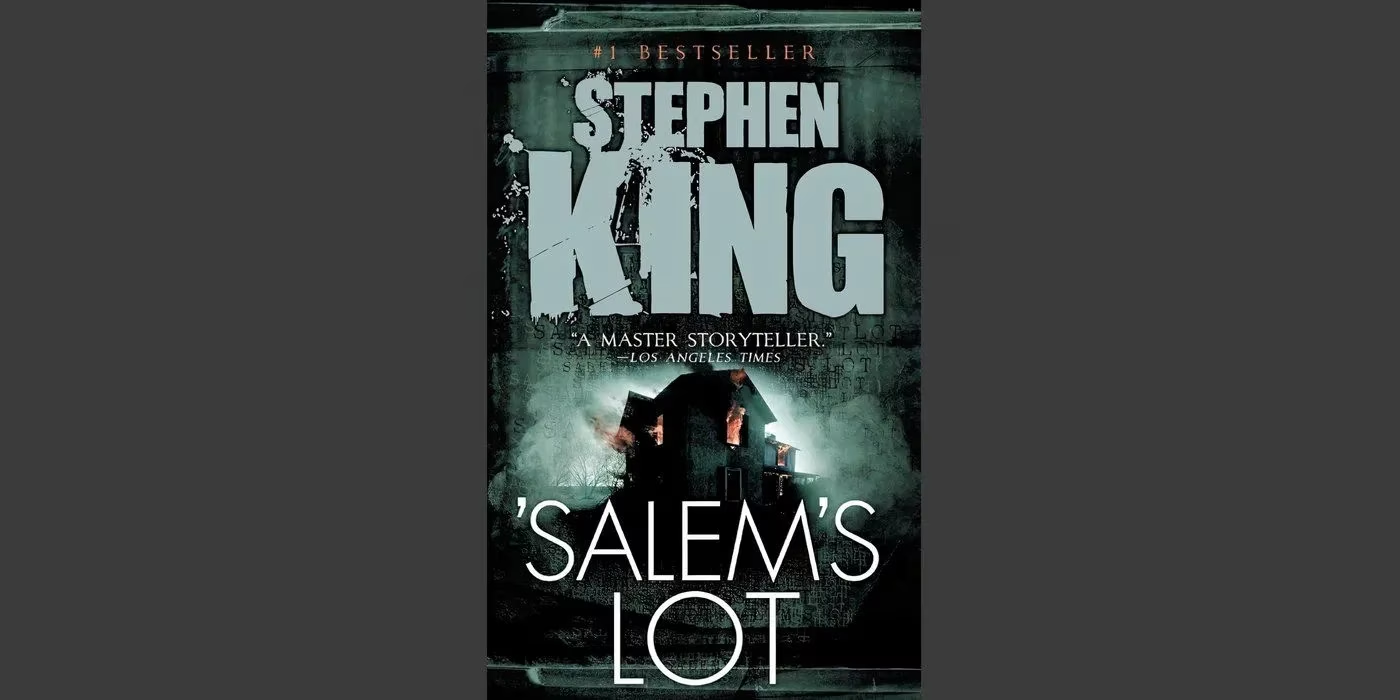
Reading 'Salem's Lot isn't optional for Tower junkies—it’s essential homework! Father Donald Callahan, the priest who failed to stop vampire Kurt Barlow, becomes crucial in Wolves of the Calla and Song of Susannah. Why can't he enter a church? Because Barlow forced him to drink vampiric blood, rendering him "unclean." This trauma follows him to Mid-World, where his ability to sense vampires is vital. Without 'Salem's Lot, his haunted presence makes little sense. The book also establishes vampire lore (Type Ones, Twos, Threes) that Callahan weaponizes against the Wolves. The most literal connection? Callahan finds a copy of 'Salem's Lot itself at the end of Wolves of the Calla—a meta moment only King could pull off. 📖🩸
5 Insomnia (1994): Visions of the Tower & The Crimson King
Ralph Roberts' sleepless nights in Derry lead to a direct confrontation with The Crimson King, the Tower's ultimate enemy, making his first physical appearance here. The Crimson King targets a child—Patrick Danville, the same artist Roland later saves from Dandelo! Why? Because Danville is destined to play a role in the Crimson King's downfall. Young Patrick even has visions of Roland Deschain years before their meeting. The book expands the Tower's lore significantly:
-
The Bald Doctors explain accessing other realities.
-
Ralph witnesses a vision of the Dark Tower itself.
-
Establishes the mechanics of Purpose vs. Random.
Insomnia proves even King's 'quieter' horrors vibrate on the same frequency as the Tower. 🔴👁️
4 Hearts In Atlantis (1999): Breakers, Low Men & Hidden Flags
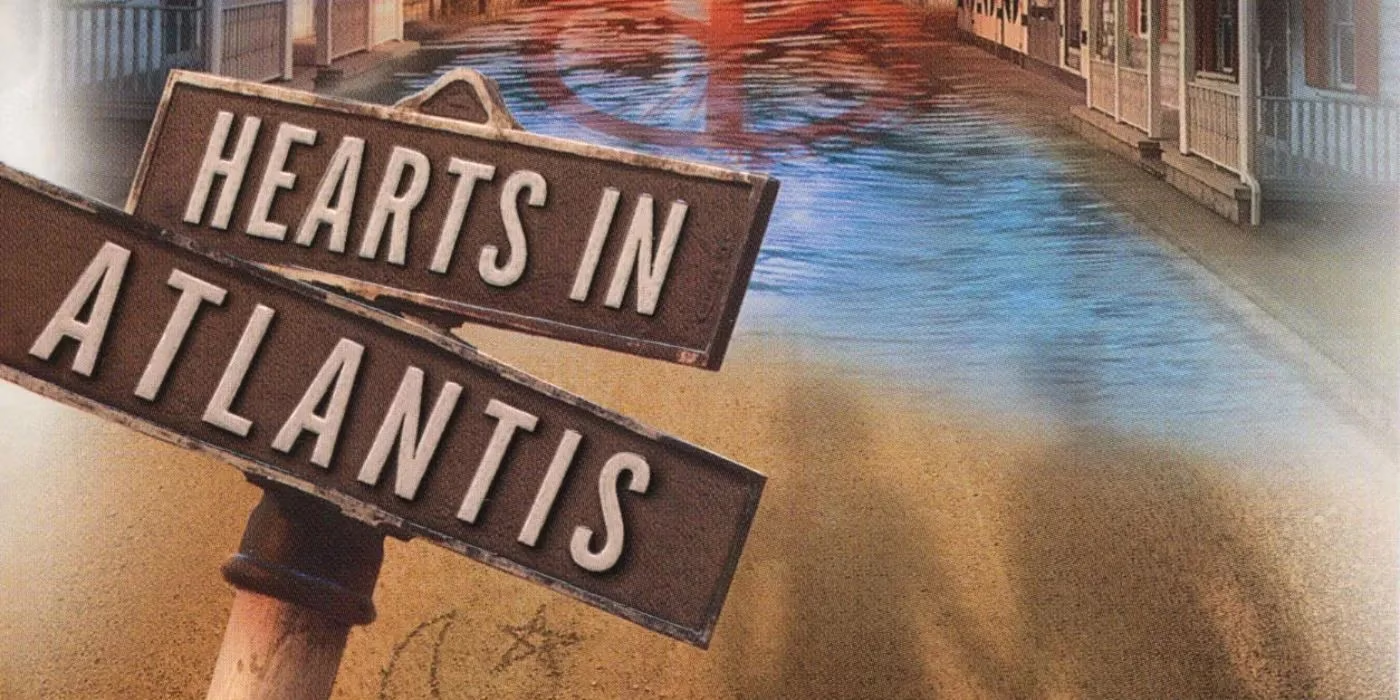
This short story collection is a Trojan horse for Tower lore! "Low Men in Yellow Coats" introduces Ted Brautigan, a powerful psychic "Breaker" the Crimson King covets to destroy the Tower. Brautigan sends Bobby a letter with rose petals—a direct nod to the Field of Roses surrounding the Tower. The collection also fleshes out the terrifying "Low Men," agents of the Crimson King:
-
A yellow coat appears in a Vietnam hallucination.
-
The story "Blind Willie" hints at Randall Flagg's presence via the character Raymond Fiegler (sharing Flagg's "RF" initials and Walter O'Dim's ability to be "dim").
Hearts in Atlantis shows how ordinary lives are entangled in the Tower's cosmic struggle. 💛🧠
3 The Talisman & Black House: Territories, Twinners & Blasted Lands
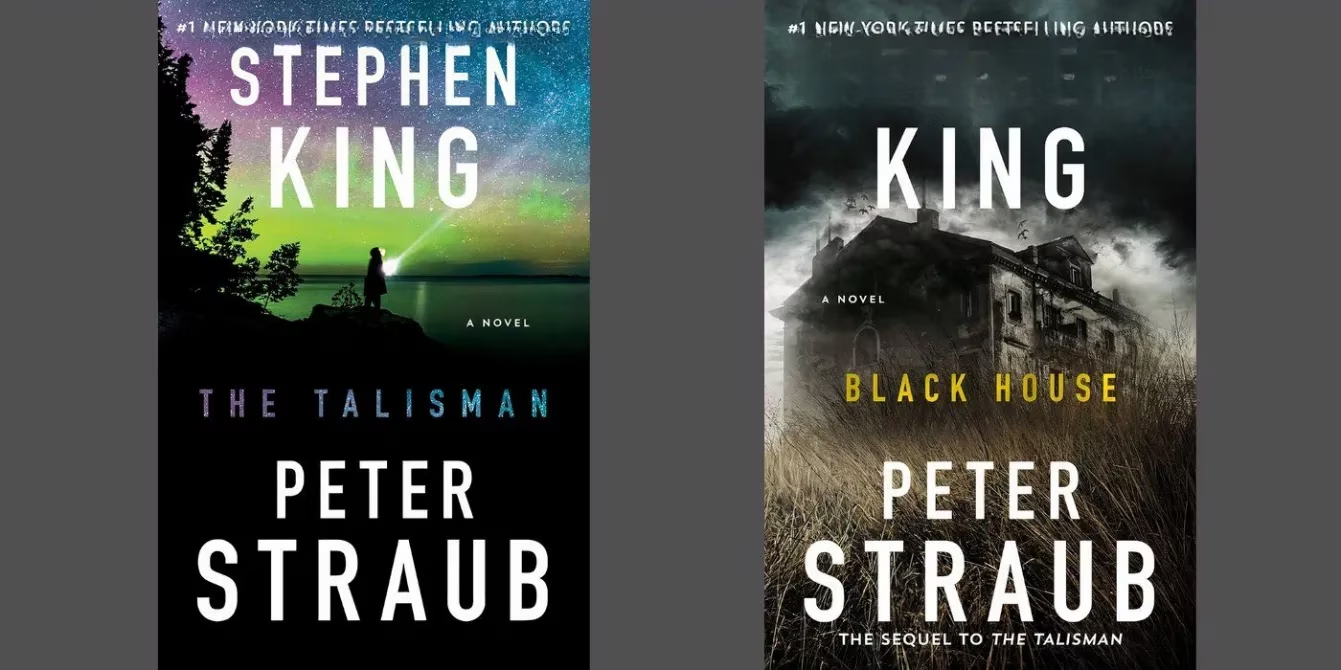
King's collabs with Peter Straub dive deep into concepts mirroring the Tower's multiverse. Twinners (parallel universe counterparts) and The Territories (a parallel world) feel like cousins to Mid-World and its variations. Speculation runs wild:
-
Is The Talisman's hero, Jack Sawyer, the Twinner of The Wind Through the Keyhole's Tim Ross? (Both quest to save mothers, lose fathers).
-
Black House suggests Sawyer might be Roland Deschain's Twinner (both become lawmen/gunslingers).
Physical locations bridge the gap too. The desolate Blasted Lands in The Dark Tower bear an uncanny resemblance to ravaged areas described in these novels. The connections are thematic gold! 🔄🌍
2 The Eyes Of The Dragon (1987): Flagg in Fantasyland
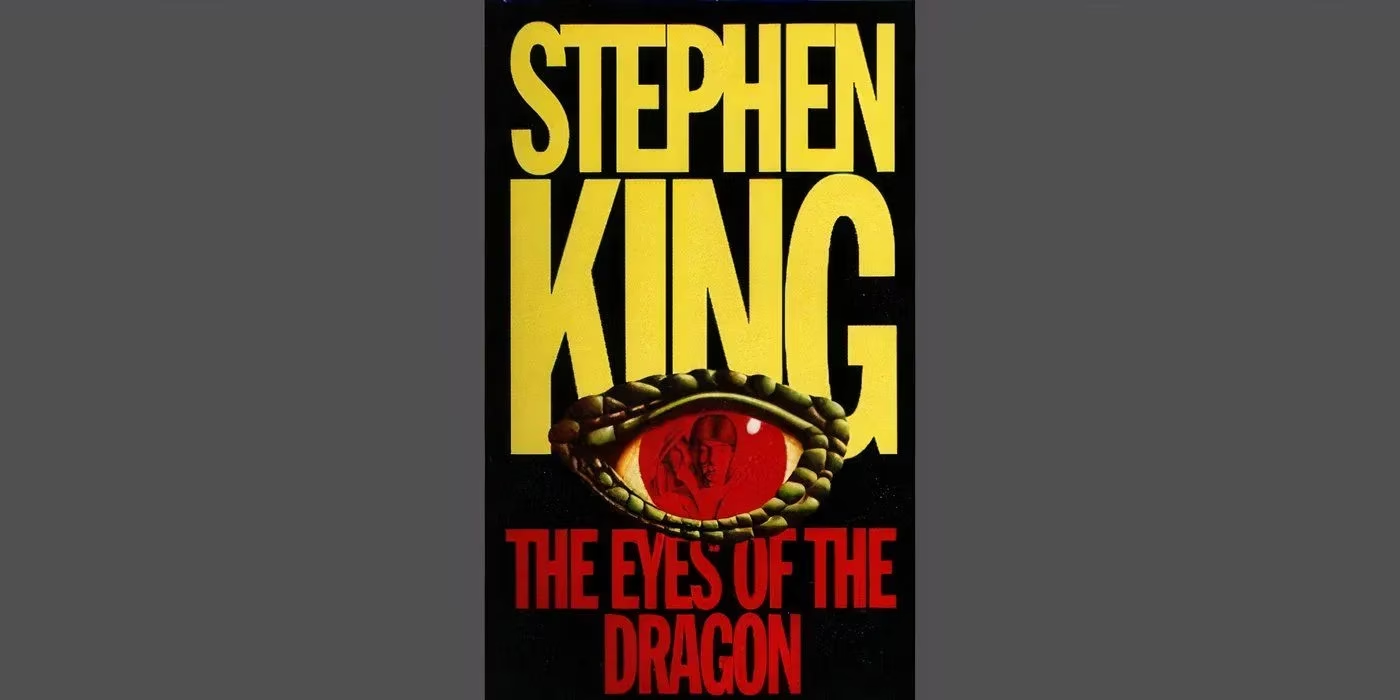
Flagg returns as the villain in this fantasy tale set in Delain, a realm also mentioned in the Tower prequel The Little Sisters of Eluria. He serves King Roland the Good—could this Roland be a Twinner of our Roland? King leaves it tantalizingly open. Key locations overlap:
-
Gilead: Roland Deschain's home.
-
Garlan: Where Flagg claims origins.
The witch Rhea of the Cöos, first appearing here causing chaos, later becomes a major foe for Roland in Wizard and Glass. Flagg's fantasy outing is another thread binding King's worlds. 🐉👑
1 Small But Mighty Connections: King's Multiverse Easter Eggs
Not every link is a universe-shattering event. Sometimes, it's a subtle nod, a name drop, or a familiar object:
| Book | Connection to The Dark Tower | Image |
|---|---|---|
| Cell (2006) | Protagonist Clay Riddell created a graphic novel called "The Dark Wanderer," featuring an apocalyptic cowboy identical to Roland. | 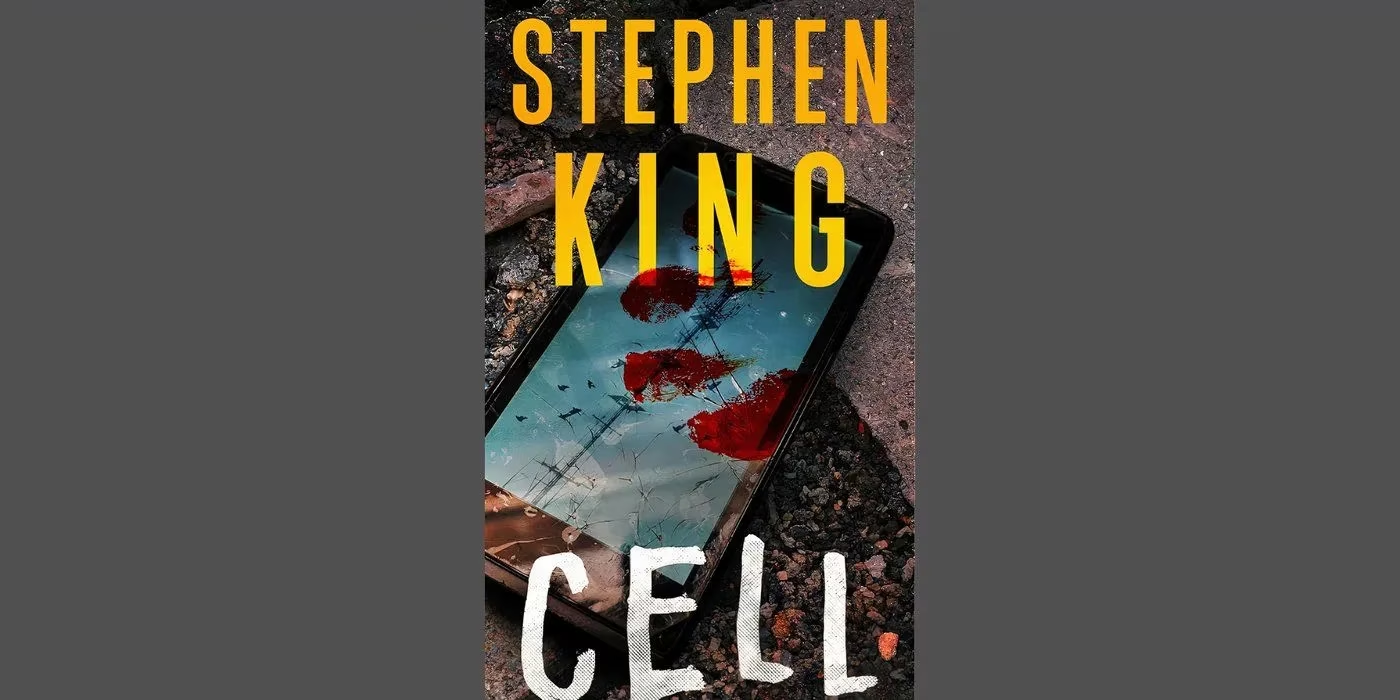 |
| The Shining (1977) | Danny Torrence and the Overlook Hotel are directly mentioned within the series. | 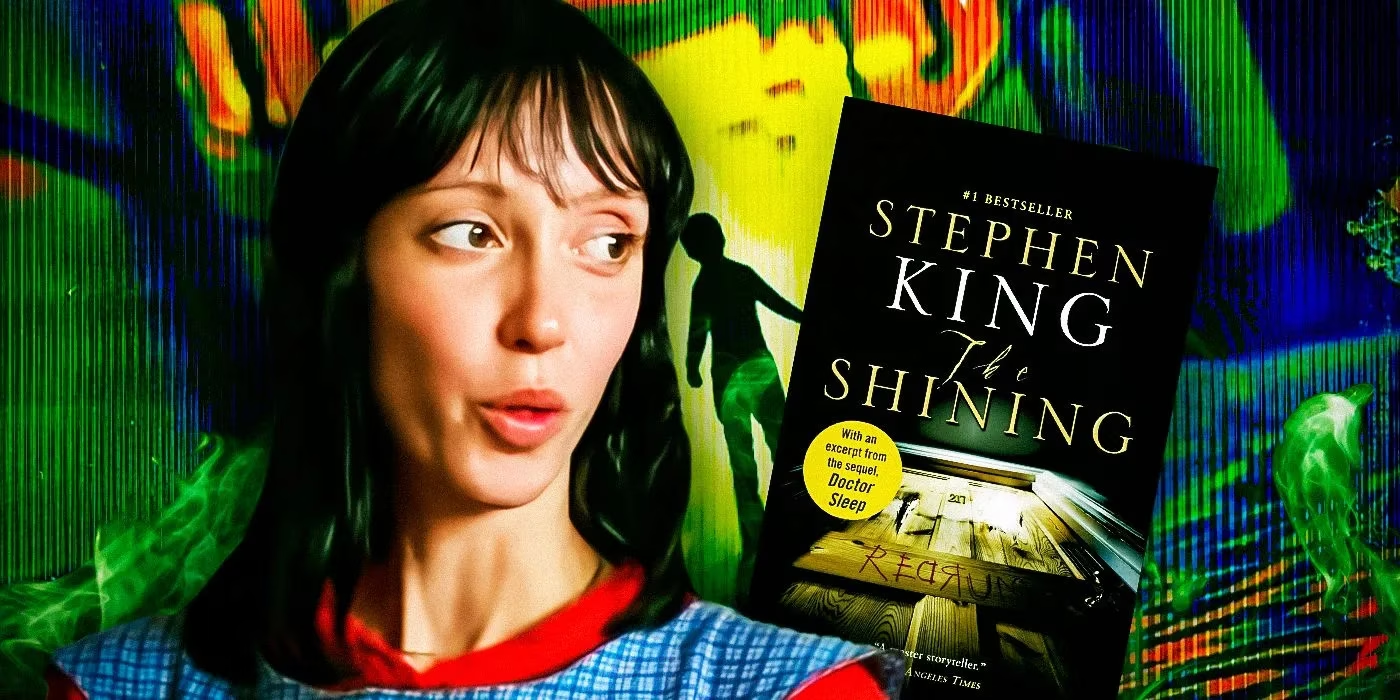 |
| Everything’s Eventual (1997) | Features Dinky Earnshaw, a Breaker like Ted Brautigan. The evil Trans Corporation (a Sombra subsidiary) reappears, hunting Breakers for the Crimson King. | 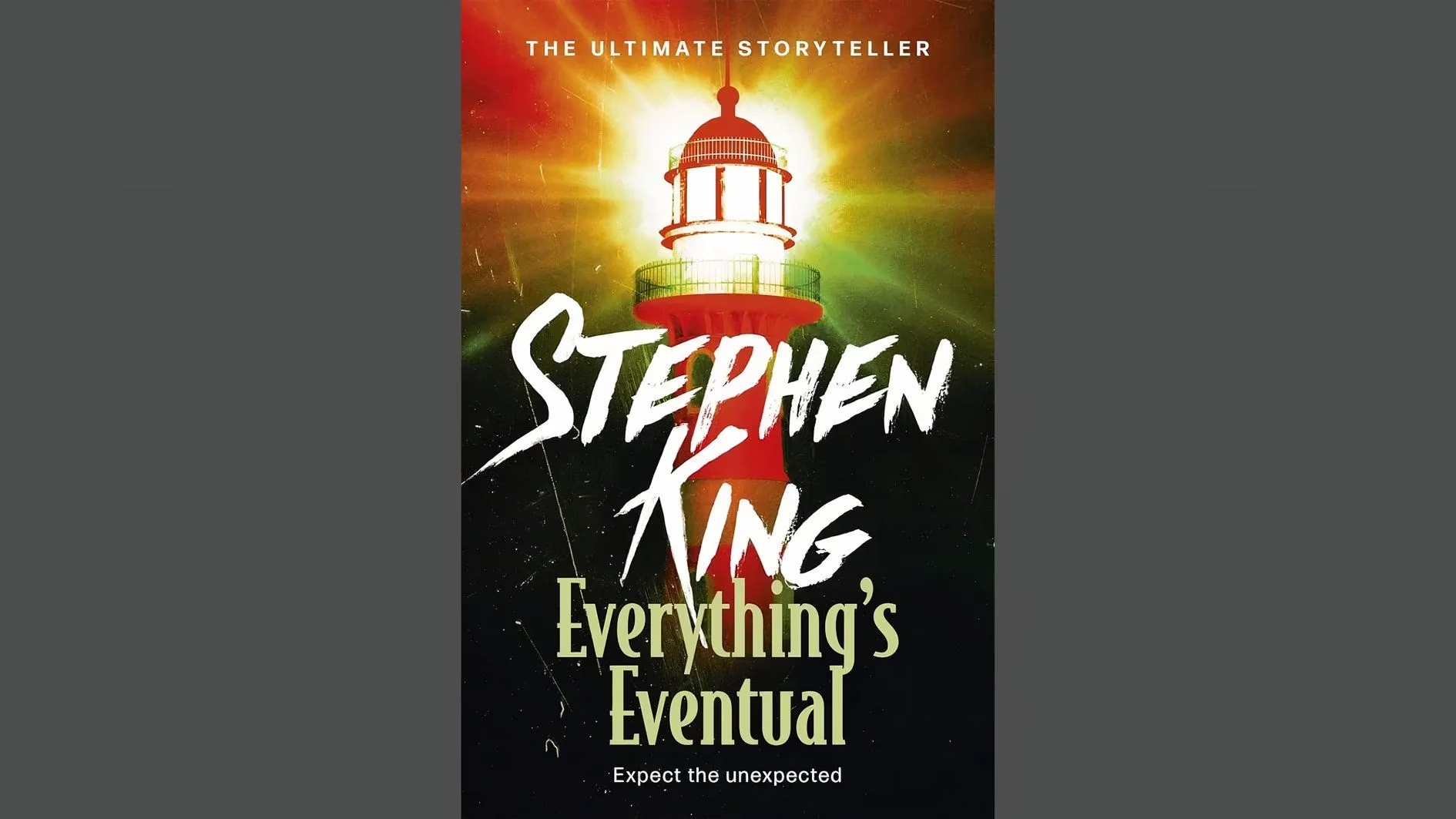 |
| 11/22/63 (2011) | Features the Takuro Spirit car, later seen in the apocalyptic Topeka of Wizard and Glass. A character asks Jake Epping if he knows about "the Turtle"! | 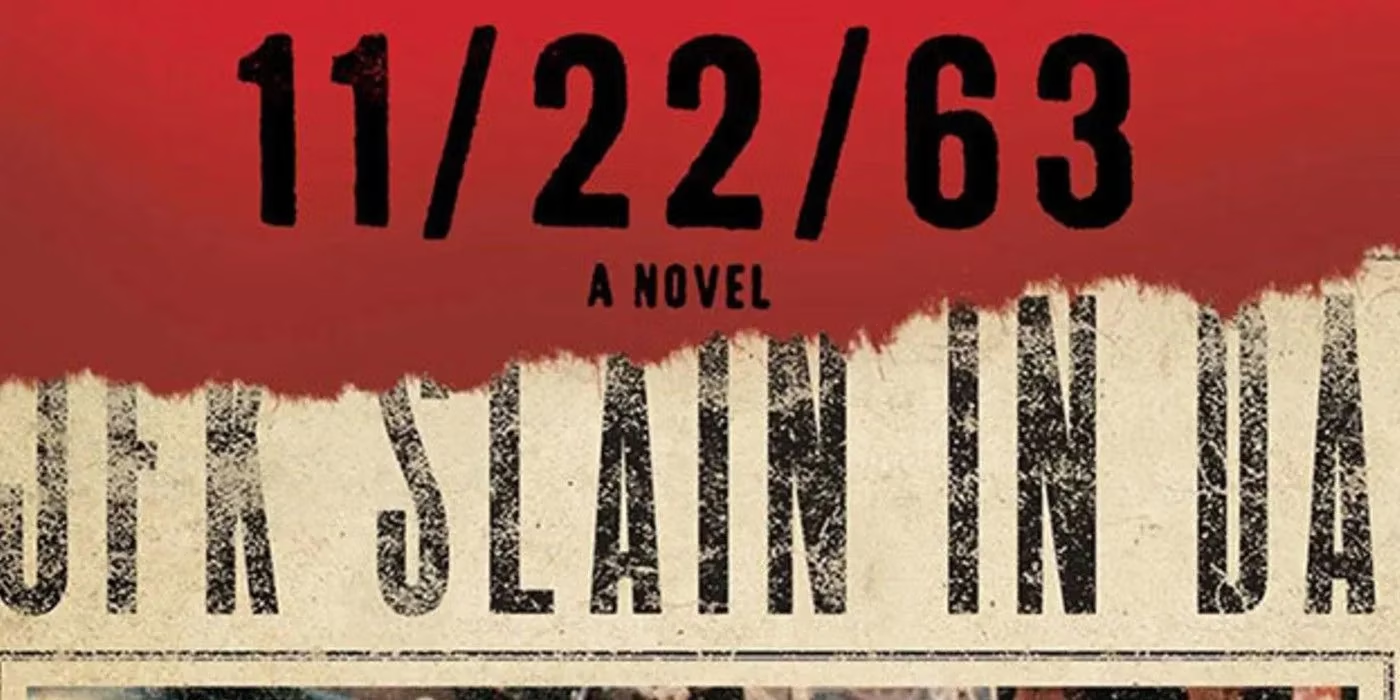 |
| Buick 8 (2002) | The titular car resembles Todash-monster portals. Roland uses alias Will Dearborn; Buick 8 features a Sandy Dearborn. A character reads a book by Dr. John H. Maturin. | 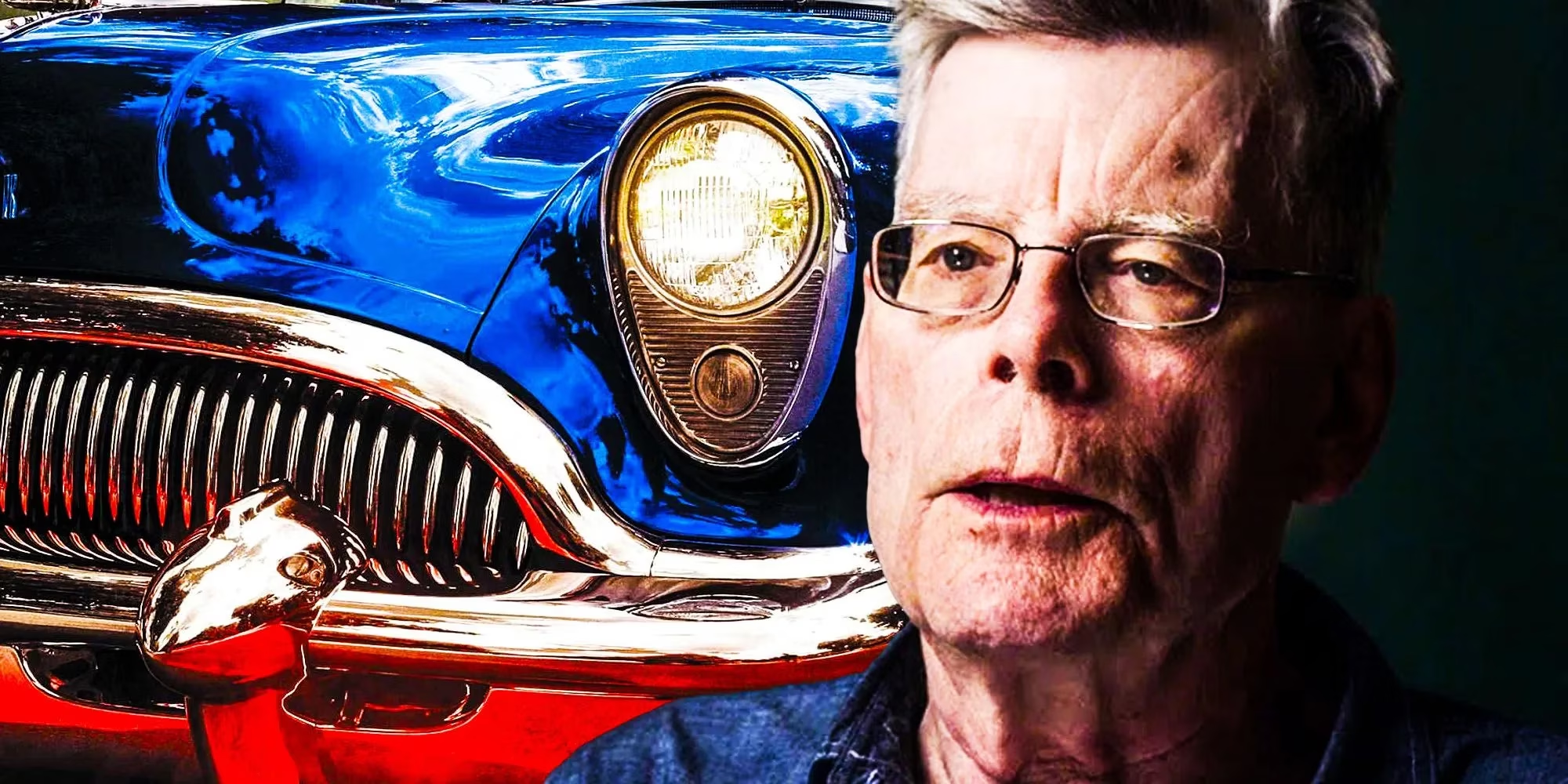 |
| The Mist (1980) | The Arrowhead Project is heavily implied to have created a thinny—a weak spot to Todash Space full of monsters, a major concept in the Tower series. | 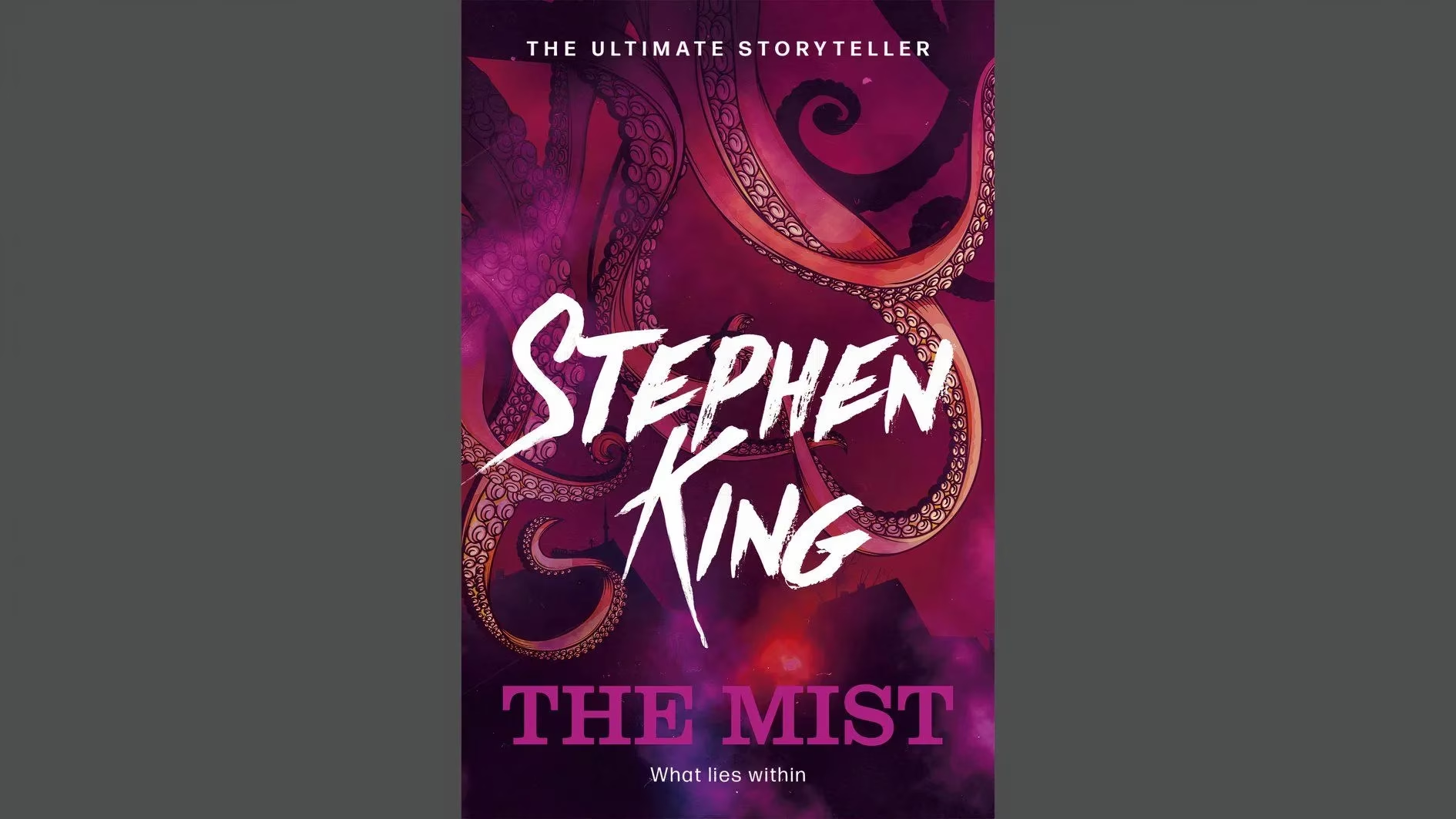 |
So, is Stephen King a horror maestro? Absolutely. But his true genius lies in architecting The Dark Tower—a sprawling, interconnected multiverse where every story, big or small, whispers the same chilling truth: All things serve the Beam. Ka is indeed a wheel. 🔮⚡
Leave a Reply
Comments