As of 2026, the prospect of a faithful adaptation of Stephen King's monumental The Dark Tower series rests with acclaimed director Mike Flanagan. Following the poorly received 2017 film starring Idris Elba, a television series format is now widely recognized as the superior medium to capture the sprawling, multi-world epic. Flanagan's proven track record with King adaptations, such as Gerald's Game and Doctor Sleep, positions him uniquely for this challenge. While creative liberties are inevitable, the adaptation's success and fidelity hinge on its inclusion of several pivotal, defining moments from the source novels. These scenes are not just plot points; they are the bedrock of the series' themes, character arcs, and haunting atmosphere.
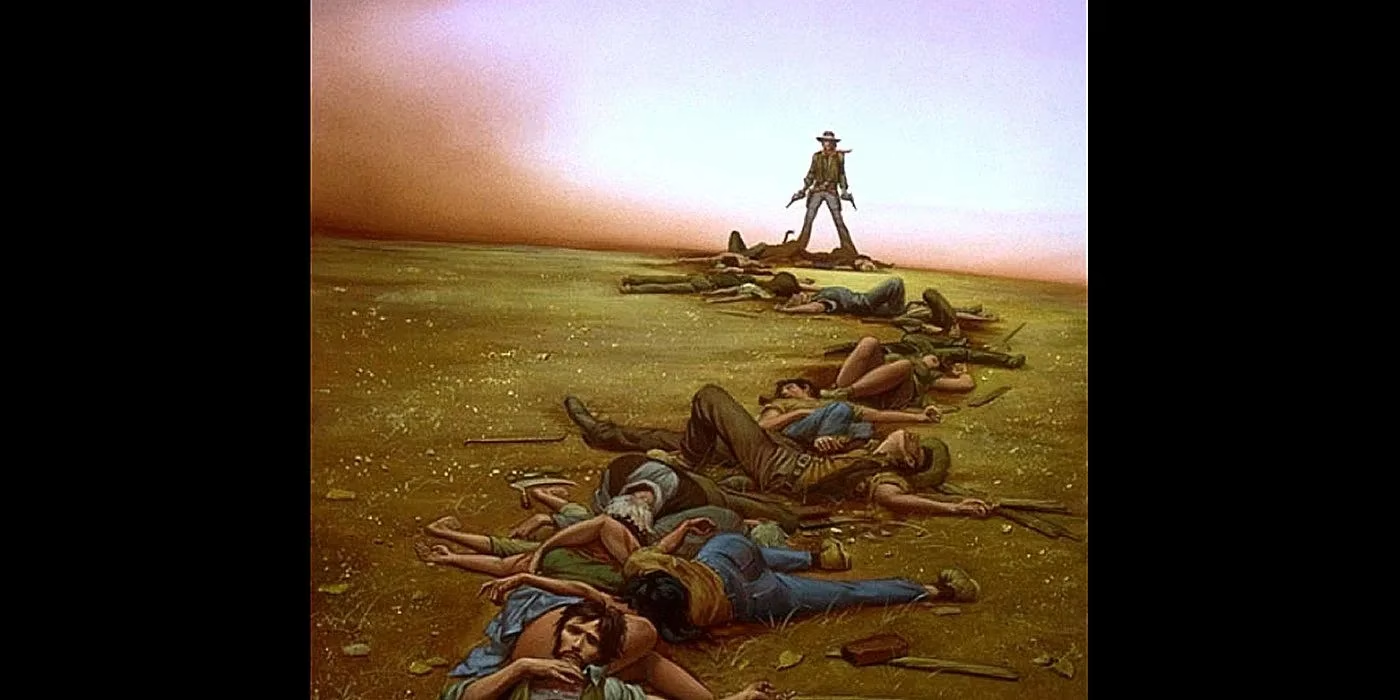
A television adaptation must begin by establishing its protagonist not as a conventional hero, but as a complex, often ruthless figure. The Battle of Tull from The Gunslinger serves this purpose masterfully. In this early sequence, Roland Deschain, the last gunslinger, is forced to defend himself against the entire, manipulated populace of the town. His retaliation—a cold, calculated massacre of every man, woman, and child—is a brutal introduction to his singular obsession. This event is crucial for setting the tone, showing that Roland's quest for the Dark Tower justifies any cost in his mind. It's a chilling moment that foreshadows the even greater sacrifices to come and lays the foundation for his morally ambiguous journey.
That moral ambiguity reaches its first devastating peak with the sacrifice of Jake Chambers. After forming a bond with the boy from another world, Roland is presented with a horrific choice by the Man in Black. To gain crucial information about the Tower, he must let Jake fall to his death. Roland's decision to do so is a defining character beat, emphasizing that his quest supersedes all human connection. Jake's final, haunting whisper, "Go then, there are other worlds than these," does more than seal his fate; it unlocks the central multiversal concept of the entire series. This act of betrayal haunts Roland for books to come, especially when Jake returns to the narrative, making it an emotionally resonant cornerstone for the adaptation.
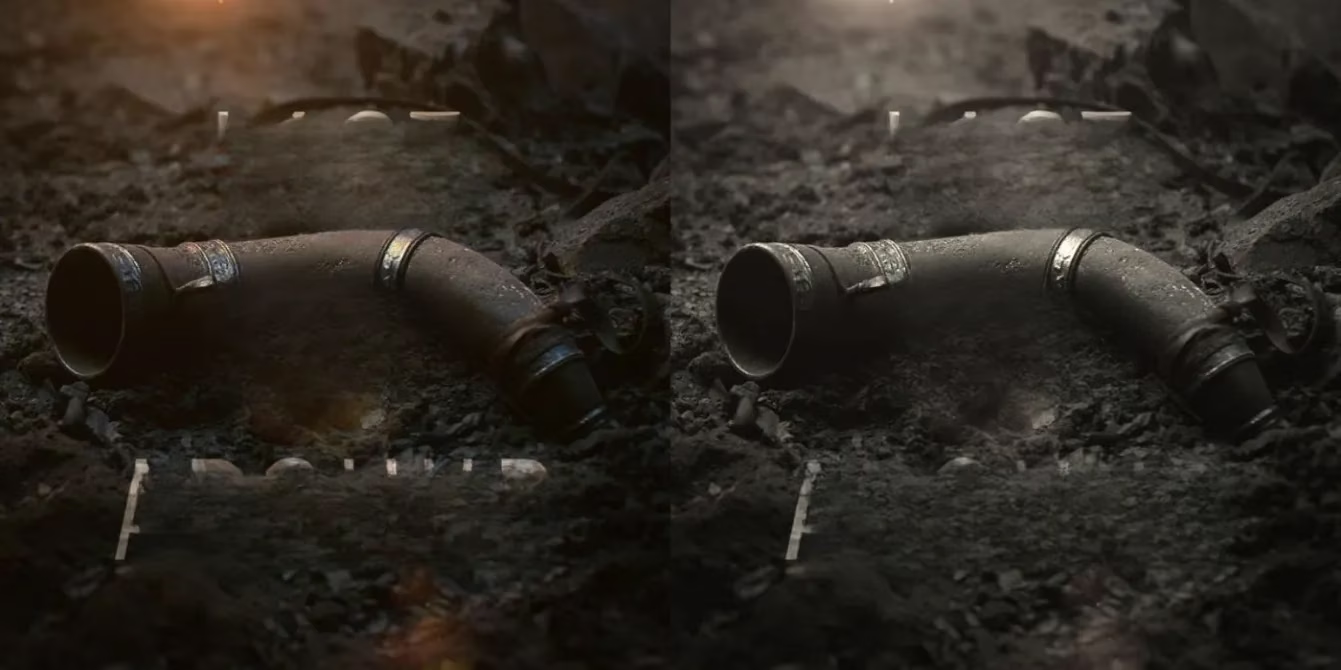
The series' rich lore and Roland's personal trauma are deeply rooted in the past, specifically the Battle of Jericho Hill. This flashback event represents the final, tragic stand of the gunslingers of Gilead. It's a visually spectacular and emotionally devastating piece of backstory that explains Roland's solitude and the weight of survivor's guilt he carries. Furthermore, the moment when the Horn of Eld is left on the battlefield becomes a critical element tied directly to the series' cyclical ending. Showcasing this battle is essential for world-building and for understanding the depth of Roland's regret and determination.
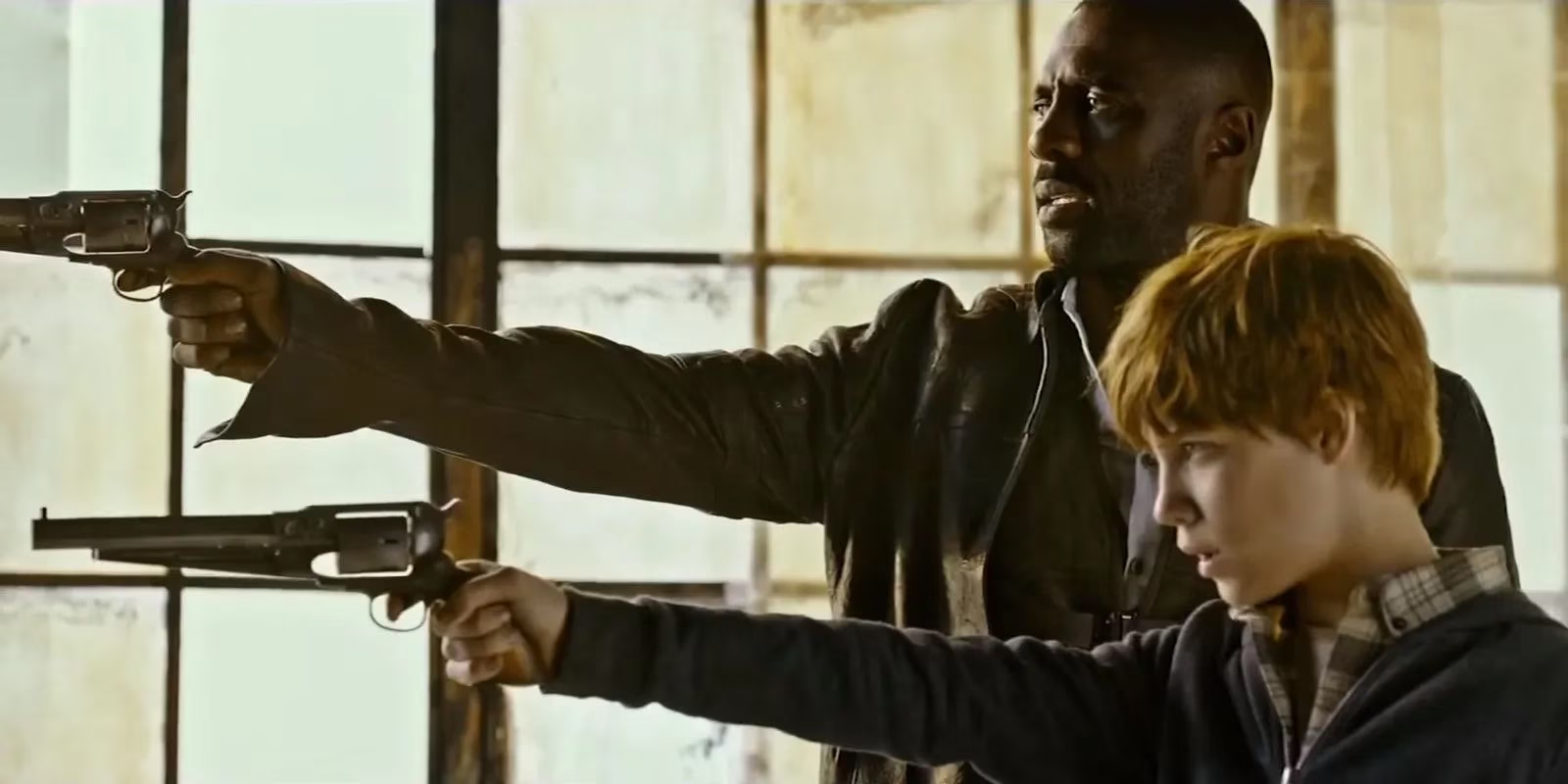
From desolate pasts to bizarre modern confrontations, the series constantly shifts tone. One of its most memorable and humorous introductions is Roland's first meeting with Eddie Dean in The Drawing of the Three. Thrust from his archaic world onto a 1980s airplane where Eddie is smuggling cocaine, Roland is a complete fish out of water. This scene is a brilliant tonal shift, injecting tense, dark humor and launching the formation of Roland's ka-tet—his destined group of companions. Capturing the absurdity, confusion, and immediate, grudging partnership of this encounter is vital for establishing the dynamic that will drive the heart of the series.
Weirdness is a hallmark of King's saga, and no antagonist embodies this better than Blaine the Mono. This psychotic, suicidal sentient train forces Roland and his ka-tet into a deadly riddle contest to save their lives. The sequence, which spans the climax of The Waste Lands and the opening of Wizard and Glass, is a masterpiece of suspense and absurdist horror. For the TV series, this presents a perfect opportunity for a season-ending cliffhanger, with the fate of the heroes resting on the answer to a riddle like "When is a door not a door?" Blaine's manic personality and the high-stakes word game are unique set pieces that must be adapted with all their original, unsettling flair.
The series' primary antagonist is a master of deception, and his true nature is a revelation that spans Roland's entire life. The Man in Black is gradually revealed to be multiple figures from Roland's past, including Walter Padick, Randall Flagg, and Marten Broadcloak. This twist, that a single malevolent entity has been manipulating events under various guises, is a profound moment for Roland's character. While a TV audience might recognize the same actor playing these roles, the narrative impact of Roland piecing together this conspiracy is crucial. It underscores the villain's omnipresent threat and connects The Dark Tower to King's larger literary universe, as Flagg is a villain in other works like The Stand.
As the journey nears its end, the ka-tet begins to unravel, starting with the death of Eddie Dean. Eddie's fall during the raid on Algul Siento to free the Breakers is a devastating blow. He was often the emotional heart and glue of the group, and his loss fundamentally changes its dynamics. His final moments and last words resonate deeply with Roland, Susannah, and Jake, shaping their final arcs. This event is not just a character death; it's the catalyst for the story's final, lonely act and a poignant reminder of the cost of Roland's quest.
In one of the most audacious meta-fictional twists in modern literature, the ka-tet must literally save their author. Stephen King writes himself into the narrative, and his characters must prevent the real-life 1999 van accident that nearly killed him. This fourth-wall-shattering plot point is pivotal, as ensuring King's survival is directly tied to the integrity of their own reality and story. It even leads to Jake sacrificing himself a second time to save the author. For the adaptation, this moment is non-negotiable. It would be profoundly effective if King made a cameo, grounding this surreal narrative gamble in a startlingly real visual.
Not every character's journey ends in death. Susannah Dean's arc concludes with a decision born of profound wisdom and exhaustion. After losing Eddie and Jake, she chooses to stop her quest for the Dark Tower. Realizing Roland must finish his journey alone, she steps through a magical door to another world where versions of Eddie and Jake await her. This ending provides a rare note of peace and acceptance amidst the saga's tragedy. It is also thematically essential, ensuring that Roland arrives at his final destination in the ultimate solitude that his lifelong obsession has wrought.
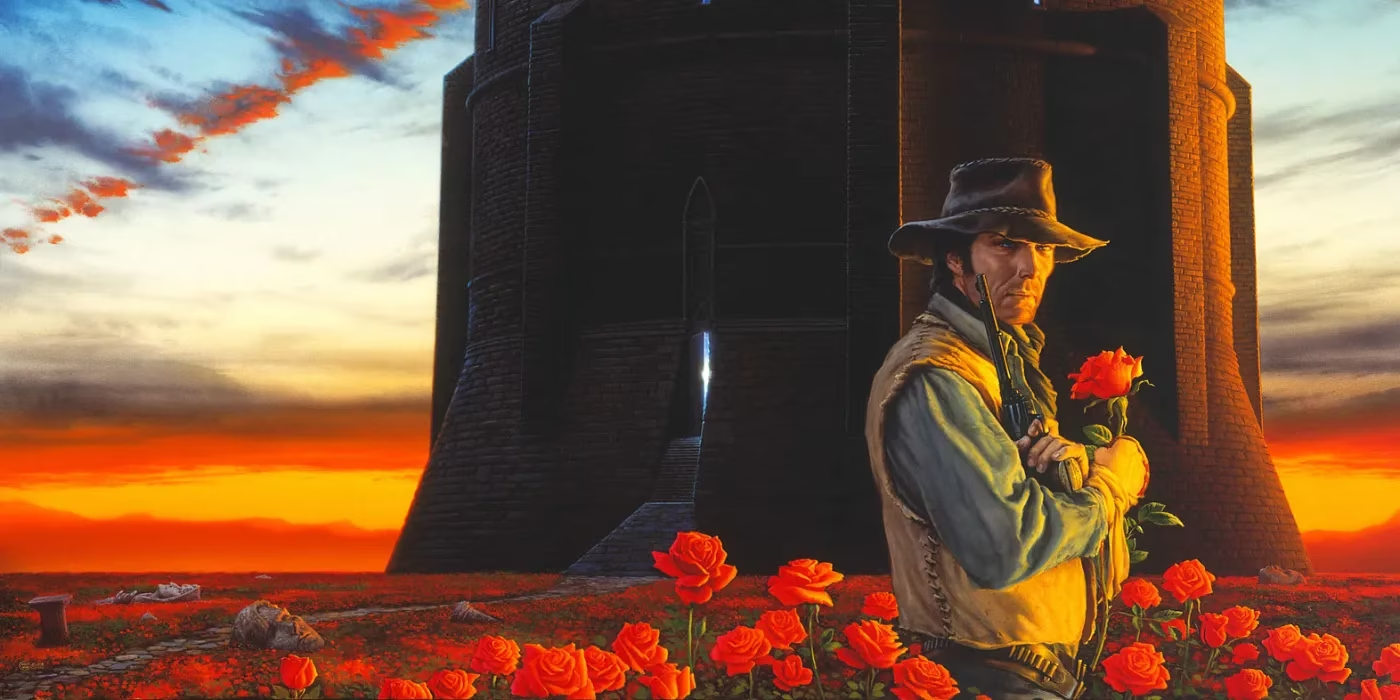
Finally, the adaptation must have the courage to faithfully portray King's haunting, cyclical ending. Roland finally climbs the Dark Tower, only to discover the horrifying truth: he has done this countless times before, trapped in an endless loop, doomed to repeat his quest for eternity—though with one key item, the Horn of Eld, now in his possession in this new cycle. This unsettling conclusion is the thematic core of the entire series, reframing the epic journey as a poignant purgatory. A different ending would betray the source material's essence. For Flanagan's adaptation to truly resonate and stand as the definitive version, it must guide viewers through this bizarre, heartbreaking, and unforgettable finale, ensuring the journey's end is as impactful as the moments that defined it.
Leave a Reply
Comments